How Can FWD Forgings Support Custom Steel Forging Projects for Industrial Applications?
September 2, 2026
FWD Forgings supports industrial buyers with forged steel parts, custom forged parts, and other steel forging solutions for demanding applications. The right forging supplier should do more than produce a shape from a drawing. It should understand material selection, forging temperature, deformation, grain flow, heat treatment, machining allowance, dimensional control, and final inspection. These factors directly affect component performance and production cost. For example, a heavy-duty shaft may require a different forging route from a compact connecting component. A large structural forging also needs different equipment and inspection controls from a small precision part. FWD Forgings approaches each project according to the component design, material grade, production volume, application requirements, and downstream machining needs. This approach helps buyers develop a practical forging specification before moving into serial production.
What Makes Forging Suitable for Industrial Steel Components?
Forging shapes metal through controlled plastic deformation.
The process can use a hammer, mechanical press, hydraulic press, or other forging equipment. The selected method depends on component size, geometry, material, production volume, and required deformation.
During forging, the material changes shape under controlled force.
This process can also influence the internal grain flow of the steel.
For many load-bearing applications, engineers consider grain flow an important advantage of forged components. The forging process can align the material structure with the general shape of the component.
This differs from machining a component entirely from a solid billet.
Machining removes material to create the required geometry.
Forging first creates a near-net or preform shape. Machining then removes a smaller amount of material to achieve final dimensions.
This combination can reduce material waste and support efficient production for many component designs.
Forging vs. Machining from Solid Stock
A buyer should compare the complete manufacturing process rather than only the purchase price.
Machining a large steel component from solid stock can require substantial material removal.
The process can also create long machining cycles.
Forging can move more material toward the final component geometry before machining begins.
This becomes increasingly relevant for larger components.
For example, a shaft with several stepped diameters may require substantial material removal when machined from round bar.
A forged preform can reduce the amount of material that machining needs to remove.
However, forging is not automatically suitable for every component.
Very low-volume parts, simple geometries, or components with tight final dimensions may favor other manufacturing methods.
The supplier should therefore evaluate the complete production route.
Where Forging Creates Value
Forging can provide several manufacturing benefits:
- Efficient material distribution
- Controlled grain flow
- High structural integrity
- Reduced machining allowance
- Flexible material selection
- Suitable production for load-bearing parts
- Scalability from development to volume production
The actual benefit depends on the component design and process control.
A good forging specification should connect the manufacturing process with the final application.
How Does FWD Forgings Approach Custom Forged Parts?
Custom forged parts begin with a clear understanding of the customer’s requirements.
A drawing alone may not provide enough information.
The supplier should review the geometry, material grade, heat treatment, tolerances, surface requirements, inspection standards, and expected production quantity.
FWD Forgings can use these requirements to determine a suitable forging route.
The process may involve open-die forging, closed-die forging, ring forging, or another method.
The selected process depends on the component.
Engineering Review Before Production
An engineering review can identify potential manufacturing problems before tooling or production begins.
The supplier should evaluate:
- Material grade
- Component dimensions
- Section thickness
- Draft angles
- Fillet radii
- Forging direction
- Required deformation
- Machining allowance
- Heat treatment
- Final tolerances
- Inspection requirements
These factors can influence both tooling and production cost.
For example, sharp transitions in a forged component may create unnecessary forming difficulty.
Adding suitable radii can improve material flow and reduce local stress during forging.
A small design change at the engineering stage may therefore prevent a larger production problem later.
Forging Direction Matters
Forging direction should follow the component’s functional requirements where practical.
A shaft, gear blank, connecting component, or structural part may have different load paths.
The forging process should consider these loads.
The objective is to create a suitable material flow pattern while maintaining dimensional and metallurgical requirements.
This is one reason why a forging supplier should review the application rather than simply reproduce the external geometry.
What Types of Steel Forging Parts Can Be Produced?
Steel forging covers a wide range of industrial components.
The final geometry, weight, material, and production method can vary significantly.
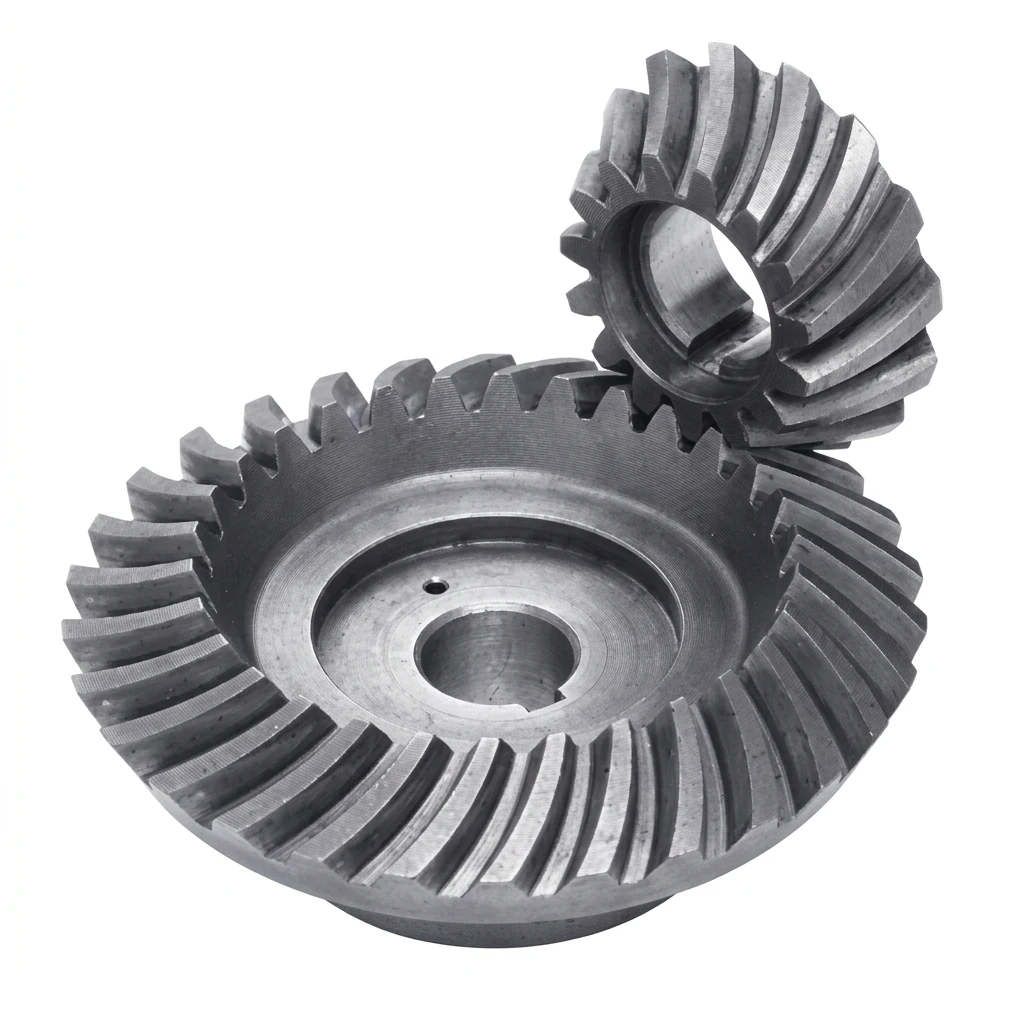
Common products include shafts, rings, hubs, flanges, pins, gears, connecting components, brackets, structural parts, and transmission components.
The exact manufacturing route depends on the product.
Small and Medium Components
Smaller steel components often suit closed-die or precision-oriented forging processes.
The die creates a controlled cavity around the component.
The process can produce repeatable shapes at higher production volumes.
This approach can reduce machining requirements.
It also supports consistent production across large quantities.
However, tooling costs need to be considered.
For a small order, tooling investment can represent a large portion of the total project cost.
The buyer should therefore evaluate tooling against expected lifetime volume.
Large Components
Large components require different equipment and process planning.
Open-die forging can provide flexibility for large cross-sections and complex deformation sequences.
The forging process may involve several stages.
The operator controls reduction, rotation, and deformation throughout the process.
Large components also require careful temperature management.
If the material cools too quickly, deformation behavior can change.
If temperature remains too high, grain growth or other metallurgical issues may arise.
The process therefore needs controlled heating and forging conditions.
Heavy-Duty Components
Industrial equipment often uses components that experience high loads, impact, bending, or cyclic stress.
These applications can include mining equipment, construction machinery, energy systems, industrial transmission systems, and large mechanical assemblies.
FWD Forgings supplies heavy equipment forgings for industrial applications where component geometry, material selection, and manufacturing consistency require careful coordination.
The final component should match the load conditions of the equipment.
A component designed for static loading may require different specifications from one exposed to repeated impact.
This distinction should appear in the technical specification.
How Should Buyers Select Materials for Custom Metal Forgings?
Material selection affects strength, toughness, wear resistance, heat treatment, machinability, and cost.
The correct steel grade depends on the application.
Common forging materials include carbon steels, alloy steels, stainless steels, and other engineering steels.
The buyer should define the required material standard.
Examples may include ASTM, AISI, EN, DIN, JIS, or other recognized specifications.
The material grade should not be selected only because it has a high nominal tensile strength.
The application may require a balance between strength and toughness.
Heat treatment also changes the final mechanical properties.
Carbon Steel
Carbon steel can suit many general industrial components.
Its cost and machinability can make it practical for applications with moderate mechanical requirements.
However, the specific carbon content and material grade affect strength and weldability.
The supplier should confirm the exact grade before production.
Alloy Steel
Alloy steel can provide higher strength and improved performance after suitable heat treatment.
Common alloying elements include chromium, molybdenum, nickel, manganese, and silicon.
The selected combination depends on the required properties.
For shafts and high-load transmission components, alloy steel can provide a useful balance of strength, toughness, and fatigue resistance.
Stainless Steel
Stainless steel can be appropriate when corrosion resistance is important.
Different stainless grades offer different combinations of corrosion resistance, strength, toughness, and machinability.
Forging temperature and heat treatment must match the selected grade.
The supplier should also confirm whether the finished component requires passivation or other surface treatment.
Material Traceability
For industrial components, traceability can be an important purchasing requirement.
The buyer may request:
- Material certificate
- Heat number
- Chemical composition
- Mechanical test results
- Heat-treatment record
- Inspection record
Traceability allows the buyer to connect the finished component with its original material batch.
This becomes especially important for safety-critical or heavily loaded applications.
What Quality Controls Should Buyers Expect from a Forging Supplier?
Quality control should cover the complete manufacturing process.
Final dimensional inspection alone cannot verify every forging characteristic.
A suitable quality plan should begin with incoming material and continue through forging, heat treatment, machining, and final inspection.
Raw Material Inspection
The supplier should verify material identity before production.
This may include checking the material certificate and heat number.
For specific applications, additional chemical or mechanical verification may apply.
The required inspection depends on the customer’s specification.
Forging Process Control
The supplier should control key forging parameters.
These may include:
- Heating temperature
- Soaking time
- Forging temperature
- Reduction ratio
- Deformation sequence
- Cooling method
- Die condition
Process records can help maintain consistency across production batches.
Heat Treatment
Heat treatment can significantly influence mechanical properties.
Depending on the material and application, processes may include normalizing, annealing, quenching, tempering, or other treatments.
The correct cycle depends on the steel grade and required properties.
Temperature alone does not define a successful heat-treatment process.
Heating rate, holding time, cooling method, and part geometry can also affect results.
The supplier should therefore maintain controlled heat-treatment parameters.
Non-Destructive Testing
Some components require non-destructive testing.
Possible methods include:
- Ultrasonic testing
- Magnetic particle inspection
- Dye penetrant inspection
- Visual inspection
- Dimensional inspection
Ultrasonic testing can help identify internal discontinuities in suitable materials.
Magnetic particle testing can detect surface and near-surface discontinuities in ferromagnetic components.
The inspection method should match the material and defect type.
The buyer should specify the applicable standard and acceptance level.
How Do Forged Steel Parts Move from Forging to Final Machining?
Forging often creates a preform rather than the final finished component.
Machining then produces the required dimensions.
This means forging and machining should not be planned separately.
The two processes should work together.
The forging supplier needs to understand which surfaces will receive machining.
This information determines the machining allowance.
Too little allowance can create problems if forging tolerances shift.
Too much allowance increases material consumption and machining time.
The correct allowance should reflect the forging process and final dimensional requirements.
Machining Requirements
Buyers should define critical dimensions clearly.
These may include:
- Bore diameter
- Shaft diameter
- Keyway dimensions
- Flatness
- Concentricity
- Runout
- Surface roughness
- Thread dimensions
- Geometric tolerances
Not every surface needs the same tolerance.
Critical features should receive tighter control.
Other surfaces can use practical manufacturing tolerances.
This approach prevents unnecessary machining costs.
Machined Forgings
Some buyers prefer one supplier to manage both forging and machining.
This can simplify production coordination.
It also reduces the need to move semi-finished components between different factories.
FWD Forgings provides machined forgings for projects that require additional machining after the forging stage.
The final scope should define which operations the supplier performs.
This may include rough machining, finish machining, drilling, boring, turning, milling, threading, or other processes.
How Can Custom Forging Reduce Total Manufacturing Cost?
Unit price alone does not determine the cost of a forged component.
The buyer should consider the complete manufacturing cycle.
A component with a higher forging price may still have a lower total cost if it reduces machining time and material waste.
The calculation should consider:
Material cost
- Forging cost
- Heat-treatment cost
- Machining cost
- Inspection cost
- Surface treatment
- Packaging
- Transportation
The manufacturing route should then be compared against alternative production methods.
Material Utilization
Forging can improve material utilization for many component geometries.
The preform can place material closer to the final shape.
This can reduce machining removal.
The effect becomes more important when the finished component contains large sections or complex transitions.
For example, machining a large hub from a solid billet may remove significant material.
A forged preform can reduce that machining volume.
The actual saving depends on the component geometry and process design.
Production Volume
Volume strongly affects forging economics.
Tooling costs can make low-volume production less attractive for closed-die forging.
However, higher production volumes can spread tooling costs across more units.
Open-die forging may provide greater flexibility for lower-volume large components.
The supplier should therefore evaluate expected annual demand.
A project with 100 pieces per year may require a different production method from a project with 50,000 pieces per year.
How Should Buyers Specify Custom Forged Parts?
A strong technical drawing is the foundation of a custom forging project.
However, the drawing should be supported by a complete specification.
The supplier needs enough information to understand both manufacturing and final application requirements.
Table 1. Recommended information for a custom forging RFQ
| Requirement | Information to provide |
|---|---|
| Product | Part name and part number |
| Drawing | Latest revision and approved format |
| Material | Grade and applicable standard |
| Weight | Finished weight and estimated forging weight |
| Quantity | Trial, annual, and forecast volume |
| Forging method | Preferred method if known |
| Heat treatment | Required condition |
| Machining | Required operations and tolerances |
| Surface | Roughness or treatment requirements |
| Inspection | Dimensional and NDT requirements |
| Certification | Required material and quality documents |
| Application | Equipment and operating environment |
| Packaging | Individual or bulk packaging |
| Delivery | Required schedule and destination |
This information gives the supplier a clearer basis for quotation.
It also reduces repeated technical questions.
If the buyer does not know the preferred forging method, that is acceptable.
The supplier can recommend a process after reviewing the component.
What Should Buyers Ask Before Choosing a Steel Forging Supplier?
Supplier evaluation should cover more than equipment size.
A buyer should examine engineering capability, material control, forging capacity, heat treatment, machining, inspection, documentation, and production planning.
Ask whether the supplier can handle the required component size.
Ask whether the supplier works with the specified steel grade.
Ask whether the supplier can provide the required heat treatment.
Ask whether machining is available when needed.
Ask which NDT methods the supplier can perform.
Ask how material traceability works.
Ask how dimensional inspection is documented.
Ask how nonconforming products are handled.
These questions create a more complete supplier assessment.
Equipment Capability
Equipment capacity should match the component.
For example, a supplier may have strong experience with small closed-die parts but limited capability for large open-die forgings.
The opposite can also occur.
The buyer should ask for the relevant working range.
Important parameters include:
- Maximum forging weight
- Maximum component dimensions
- Press capacity
- Hammer capacity
- Heating capacity
- Die size
- Heat-treatment capacity
- Machining envelope
The supplier should confirm these figures against the actual component drawing.
How Does Production Volume Affect Forging Process Selection?
Production volume affects tooling economics, process automation, inspection strategy, and unit cost.
A high-volume component often benefits from dedicated tooling.
A low-volume component may favor flexible forging methods.
Low-Volume Projects
Low-volume industrial components may use open-die forging or flexible tooling.
The process can accommodate dimensional changes without the same tooling investment required by high-volume closed-die production.
This can be useful for replacement parts and specialized industrial equipment.
Medium-Volume Projects
Medium-volume production requires a balance.
The supplier may use dedicated tooling for critical shapes while retaining some process flexibility.
Process repeatability becomes increasingly important.
High-Volume Projects
High-volume production can justify more dedicated tooling and automated process control.
The tooling investment spreads across a larger number of components.
The supplier can also optimize cycle time and material utilization.
This can reduce unit cost over the production run.
How Does FWD Forgings Support Industrial Purchasing Decisions?
A forging supplier should help buyers make manufacturing decisions before production starts.
This includes reviewing drawings, confirming materials, selecting forging processes, defining machining allowances, and establishing inspection requirements.
For industrial buyers, these steps can reduce technical uncertainty.
A project should also have a clear communication process.
Important technical changes should receive documented approval.
Drawing revisions should have controlled version numbers.
Material substitutions should require customer approval when they affect the agreed specification.
Process changes should also receive review when they may influence product performance.
This approach creates better traceability throughout the project.
Prototype to Production
Custom forging projects often start with a small quantity.
The initial production can verify the forging route and machining process.
The supplier can then refine process parameters before larger production runs.
This staged approach can reduce risk.
The buyer should define which dimensions and properties require validation during the first batch.
The validation criteria should match the final production requirements.
What Are the Most Common Mistakes in Custom Forging Procurement?
Buyers can create unnecessary cost when they focus only on the finished dimensions.
Forging starts before machining.
The supplier needs to understand the raw material, forging geometry, deformation, heat treatment, and machining sequence.
Mistake 1: Choosing Material by Strength Alone
A steel with higher tensile strength is not automatically the right material.
The component may require toughness, fatigue resistance, impact resistance, corrosion resistance, or machinability.
Material selection should follow the actual service conditions.
Mistake 2: Ignoring Machining Allowance
Machining allowance directly affects material use and production cost.
The forging drawing should define suitable allowances.
The supplier should confirm that these allowances fit the selected forging process.
Mistake 3: Requesting Tight Tolerances Everywhere
Very tight tolerances can increase machining cost.
Not every dimension requires the same precision.
Critical dimensions should receive appropriate tolerances.
Non-critical areas can use wider tolerances when the application permits.
Mistake 4: Leaving Inspection Requirements Undefined
Terms such as “high quality” do not provide measurable criteria.
The buyer should specify the inspection standard.
This may include dimensional tolerances, NDT standards, mechanical properties, surface conditions, and documentation.
Mistake 5: Comparing Quotes with Different Scopes
One supplier may quote forged blanks.
Another may quote heat-treated and machined components.
A third supplier may include inspection and certification.
These quotations cannot be compared directly.
The buyer should normalize the technical scope first.
What Should a Complete Forging Project Include?
A complete project can include several manufacturing stages.
The exact scope depends on the customer’s requirements.
A typical industrial forging project may follow this sequence:
Raw material selection
→ Material inspection
→ Cutting
→ Heating
→ Forging
→ Trimming or conditioning
→ Heat treatment
→ Shot blasting or surface cleaning
→ Rough machining
→ Finish machining
→ Non-destructive testing
→ Dimensional inspection
→ Final inspection
→ Packaging
→ Shipment
Each stage can influence the final component.
For example, heat treatment can change dimensions.
Machining may expose internal material conditions.
Final inspection must therefore occur after the relevant manufacturing operations.
Why Documentation Matters for Forged Metal Products
Documentation helps buyers verify what they purchased.
This becomes increasingly important for industrial components used in regulated or safety-sensitive applications.
A project may require:
- Material certificates
- Chemical composition
- Mechanical test reports
- Heat-treatment records
- NDT reports
- Dimensional inspection reports
- Certificate of conformity
- Packing list
- Traceability records
The required documentation depends on the contract and application.
The supplier should confirm these requirements before production.
This prevents documentation gaps at shipment.
It also helps buyers maintain internal quality records.
What Should Buyers Consider for Heavy-Duty Forged Components?
Heavy-duty components often face high loads and demanding operating conditions.
The forging process should therefore consider the component’s actual service environment.
Important factors include:
- Static load
- Dynamic load
- Impact
- Fatigue
- Operating temperature
- Corrosion
- Wear
- Assembly method
- Maintenance cycle
For example, a component used in mining equipment may experience impact and vibration.
A transmission shaft may experience repeated torsional loading.
A large industrial pin may experience shear and bending.
These applications require different material and process considerations.
The forging specification should reflect the actual load conditions.
How Can Buyers Build a Long-Term Forging Supply Strategy?
A reliable sourcing strategy should consider both current production and future requirements.
The buyer should evaluate whether the supplier can support design changes, volume increases, and replacement production.
The supplier should also maintain technical records for repeat orders.
These records can include:
- Approved drawings
- Process specifications
- Tooling records
- Material grades
- Heat-treatment parameters
- Inspection plans
- Approved samples
- Production history
This information reduces the risk of inconsistency between production batches.
It also makes repeat orders easier to manage.
For OEMs and equipment manufacturers, this continuity can be more valuable than a small difference in initial unit price.
Frequently Asked Questions
What are forged steel parts used for?
Forged steel parts are widely used in load-bearing and mechanically demanding equipment.
Typical applications include construction machinery, mining equipment, industrial transmission systems, agricultural machinery, energy equipment, and heavy industrial assemblies.
The actual suitability depends on material, design, forging process, heat treatment, and service conditions.
What is the difference between forged steel parts and machined parts?
Forged parts receive their basic shape through controlled plastic deformation.
Machined parts receive their final geometry through material removal.
Many industrial components use both processes.
Forging creates the preform, while machining achieves final dimensions and tolerances.
Can FWD Forgings manufacture custom forged parts from customer drawings?
Custom forging projects can start from customer drawings, specifications, samples, or technical requirements.
The supplier should review the geometry and manufacturing requirements before confirming the production route.
What materials can be used for custom metal forgings?
Common materials include carbon steel, alloy steel, and stainless steel.
The appropriate grade depends on strength, toughness, wear resistance, corrosion resistance, heat treatment, and service conditions.
Does forging require heat treatment?
Many steel forgings require heat treatment.
The exact process depends on the material grade and required mechanical properties.
Common processes include normalizing, annealing, quenching, and tempering.
Can forged parts be machined after forging?
Yes.
Many forged components require machining after forging.
Machining can produce holes, threads, bores, keyways, bearing surfaces, and other precise features.
What inspection methods are available for forged metal products?
Inspection can include dimensional measurement, visual inspection, chemical analysis, mechanical testing, ultrasonic testing, magnetic particle inspection, and other methods.
The correct method depends on the component and customer specification.
Are heavy-duty forged components suitable for mining equipment?
Forged components can be used in many mining applications.
The required material, geometry, heat treatment, and inspection level depend on the equipment and service conditions.
Components exposed to impact or cyclic loading require particular attention during engineering.
How does forging affect material utilization?
Forging can create a preform close to the final geometry.
This can reduce machining removal compared with machining a component entirely from solid stock.
The actual material saving depends on the component design and selected forging method.
What information should I provide when requesting a forging quotation?
Provide the latest drawing, material grade, quantity, dimensions, heat-treatment requirements, machining requirements, inspection standards, packaging requirements, and delivery location.
If the forging method is unknown, provide the application and technical requirements.
The supplier can then recommend a suitable process.
About FWD Forgings
FWD Forgings provides forging and related manufacturing solutions for industrial customers requiring custom steel components. Its capabilities cover the development of forged steel parts according to customer drawings, material requirements, production volumes, machining needs, and inspection specifications. The company works with industrial applications where forging process selection, material control, heat treatment, machining, and quality documentation need to function as one production chain. For buyers sourcing custom forged parts or heavy-duty forged components, FWD Forgings focuses on translating engineering requirements into a defined manufacturing process and a repeatable production plan.
References
The American Iron and Steel Institute provides technical information and standards resources concerning steel grades, steel production, and steel applications.
American Iron and Steel Institute
ASTM International develops and publishes technical standards used across metals, materials, manufacturing, testing, and industrial applications.
ASTM International
The International Organization for Standardization provides international standards covering quality management, manufacturing, materials, testing, and engineering practices.
ISO
ASM International provides technical resources covering materials science, metallurgy, heat treatment, manufacturing, and engineering materials.
ASM International