Casting vs Forging: Which Process Is Better for Steel Parts?
September 4, 2026
Casting and forging are both established methods for producing steel components, but they create parts through very different manufacturing routes. Casting melts steel and pours it into a mold, while forging shapes heated steel through controlled plastic deformation. This difference affects grain structure, mechanical properties, dimensional requirements, tooling, machining, production volume, and final cost. For components exposed to repeated loads, impact, pressure, or fatigue, forging often provides a stronger manufacturing route. Casting can offer greater design freedom for complex shapes and internal features. The right choice therefore depends on the component’s geometry, loading conditions, material grade, production volume, and required performance.
For industrial buyers, the decision should not begin with price alone. A cast component may have a lower tooling or production cost for a complex geometry. A forged component may require more forming equipment and machining, yet provide a better property profile for demanding loads. The most suitable process depends on what the component must withstand throughout its service life.
What Is the Main Difference Between Casting and Forging?
The fundamental difference comes from how the metal takes its final shape.
In casting, steel is melted and transferred into a mold. The molten metal fills the cavity and solidifies into the required geometry. The process can produce shapes that would be difficult to create through mechanical deformation. Sand casting, investment casting, and other casting methods serve different geometry, volume, and dimensional requirements.
In forging, steel starts as a solid billet, bar, or preform. The material is heated when required and then compressed between dies or shaped through controlled deformation. Open-die and closed-die forging provide different levels of shape control.
ASM International treats casting and forging as distinct stages within the broader metal fabrication process. Its technical references cover casting, bulk deformation, machining, heat treatment, and finishing as separate manufacturing operations.
The manufacturing route changes the internal structure of the steel. This becomes especially important when the component faces cyclic loading or impact.
How Casting Forms a Steel Component
Casting depends on melting and solidification.
The foundry prepares molten steel with a controlled chemical composition. The melt enters a prepared mold and begins to solidify. Cooling conditions influence the resulting microstructure and can affect shrinkage, segregation, porosity, and other casting characteristics.
Mold design also influences wall thickness, feeding, hot spots, and the ability to produce a sound component. ASM references identify these factors as important considerations in steel shape casting.
Casting provides considerable freedom in external geometry. It can also accommodate features that would require multiple operations through other manufacturing routes.
How Forging Forms a Steel Component
Forging uses mechanical force to deform solid metal into a controlled shape.
The process can involve a hammer, mechanical press, hydraulic press, or other forging equipment. The exact route depends on the material, component dimensions, geometry, production volume, and required properties.
During deformation, the material flows according to the applied forces and die geometry. The forging engineer must therefore consider the direction of material flow when designing the preform and final component.
This is one reason forged steel parts often suit components where load direction matters. Proper forging design can help align the material structure with important load paths.
How Do Casting and Forging Affect Mechanical Performance?
Mechanical performance is one of the most important reasons to compare the two processes carefully.
A component may look identical after machining, painting, or surface treatment. Its internal structure can still differ significantly because the manufacturing route differs.
Forging applies mechanical deformation after the steel reaches a suitable working condition. Casting relies primarily on solidification to form the component. These different thermal and mechanical histories influence grain structure and internal characteristics.
Grain Flow and Load Direction
Forging can create directional grain flow that follows the general shape of the component.
This characteristic can be valuable in parts subjected to repeated mechanical loads. The forging design should place material flow in a direction that supports the primary service loads.
For example, a forged connecting component may experience tensile, compressive, bending, and impact forces. The forging process can be designed around those load paths rather than simply reproducing the external shape.
This does not mean every forged component automatically outperforms every casting. Material grade, heat treatment, forging reduction, process control, defects, machining, and final inspection all affect actual performance.
Internal Defects and Material Soundness
Casting involves liquid metal solidification, so the process must control issues associated with shrinkage, porosity, inclusions, segregation, and nonuniform grain structures.
ASM material references identify these characteristics as important features of cast steel and steel ingots.
Forging has its own defect risks. Poor heating, insufficient deformation, laps, cracks, improper die filling, or unsuitable process parameters can affect quality.
The correct conclusion is not that one process eliminates all defects. Instead, each process requires a different quality-control strategy.
Heat Treatment Still Matters
Heat treatment remains important for both cast and forged steel.
Depending on the steel grade and required properties, processes may include normalizing, annealing, quenching, tempering, or other treatments.
ASM references specifically address heat treatment of carbon and alloy steel forgings, bars, tubular products, and castings.
Therefore, a purchasing specification should define the complete material condition. Simply stating “forged steel” does not provide enough information for production control.
When Should You Choose Forging Instead of Casting?
Forging becomes particularly attractive when the component must handle demanding mechanical loads.
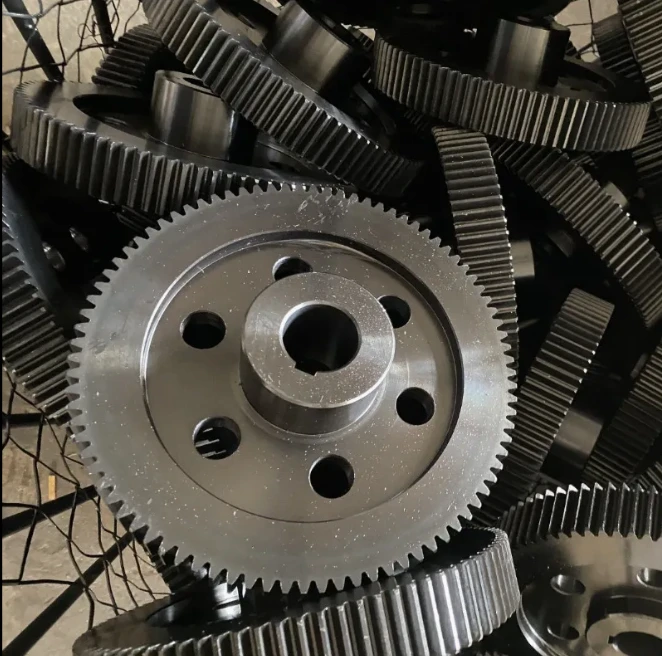
Typical examples include shafts, connecting components, gears, hubs, rings, pins, structural components, and other parts where strength and fatigue resistance matter.
The choice becomes clearer when engineers evaluate the actual operating environment.
Heavy Loads and Repeated Stress
Components under repeated loading require careful consideration of fatigue behavior.
A part may experience thousands or millions of loading cycles during its service life. Small defects or unfavorable structural characteristics can become more important under these conditions.
This is why forged components often appear in equipment where mechanical reliability has a direct effect on service life.
For heavy machinery, properly engineered heavy equipment forgings can serve applications where components experience high static loads, impact, vibration, and repeated mechanical stress.
Impact and Shock Loading
Impact loading creates another strong case for evaluating forging.
Excavator components, industrial transmission parts, lifting equipment components, agricultural machinery, and transportation components can experience sudden changes in load.
The component must tolerate more than its nominal working load. Engineers may also need to consider shock, vibration, temperature, corrosion, and misalignment.
Forging can provide a useful manufacturing route when the component design requires a strong load-bearing section and controlled material flow.
Large Load-Bearing Sections
Some industrial components require substantial cross-sections.
A forged component can be produced through open-die forging when the dimensions exceed typical closed-die capabilities. The process can progressively reduce and shape large steel stock.
Open-die forging is therefore relevant to large shafts, rings, blocks, discs, and other heavy industrial components.
The final manufacturing route may also combine forging with heat treatment, rough machining, inspection, and finish machining.
When Does Casting Make More Sense?
Casting remains highly useful when geometry drives the manufacturing decision.
A component with complex external features may require extensive forging operations if produced from a forged preform. Casting can sometimes produce the required geometry more directly.
Complex Shapes and Thin Sections
Casting can create geometries that are difficult to achieve through forging.
Internal cavities, complex contours, variable wall thicknesses, and integrated features may influence the decision.
However, the casting process must account for filling, solidification, shrinkage, feeding, and cooling behavior. Complex geometry does not automatically mean casting will produce a defect-free component.
The designer must work with the foundry process from the beginning.
Lower Production Volume
Production quantity also affects the economics.
Closed-die forging generally requires dedicated tooling. Tooling costs can therefore influence the economics of low-volume production.
Casting may offer a different cost structure for certain low-volume or complex components.
For this reason, buyers should compare total project cost rather than unit price alone.
A low initial tooling cost does not necessarily produce the lowest lifetime cost. Machining, inspection, scrap, maintenance, field replacement, and expected service life can change the calculation.
Near-Net Shape Requirements
Casting can reduce the amount of material that requires subsequent machining.
Forging can also achieve near-net or precision shapes when the geometry and tooling support it. However, many forged steel components still require machining to reach final dimensional tolerances.
Machining allowances should therefore form part of the original manufacturing discussion.
Casting vs Forging: Cost, Design, and Production Considerations
Cost comparisons become misleading when buyers compare only the initial unit price.
The manufacturing process affects tooling, material utilization, machining, heat treatment, inspection, production speed, and rejection risk.
The following comparison provides a practical starting point for supplier discussions.
Tooling Cost
Tooling should be evaluated against expected production quantity.
A forging die may represent a substantial initial investment. The cost can become reasonable when the same component runs for many production cycles.
Casting also requires patterns, molds, cores, or other tooling depending on the selected process. Tooling economics therefore depend on the actual casting method.
The correct question is not “Which process has cheaper tooling?” It is “Which process provides the required component at the lowest acceptable total cost?”
Material Utilization
Material utilization depends on component geometry and process design.
Forging may require a billet or preform larger than the finished component. Flash, trimming, machining allowance, and other process losses can affect yield.
Casting can reduce some machining requirements, but the casting process may involve gates, risers, runners, and other features that require removal.
Steel price also matters. A more expensive manufacturing process may still be commercially reasonable if it reduces field failures or machining requirements.
Machining Requirements
Machining often forms part of the final manufacturing route for both cast and forged components.
Critical surfaces may require turning, milling, drilling, boring, grinding, or other operations.
For forged components, machining removes the required allowance and establishes final dimensions.
FWD Forgings also supports machined forgings when forged components require additional machining after forming.
The machining strategy should be defined before forging dies or casting patterns are finalized. This helps control datum locations, machining allowances, tolerances, and material removal.
How Should Buyers Compare Forged and Cast Steel Components?
A professional sourcing decision should start with the application rather than the manufacturing process.
The supplier needs enough technical information to determine whether casting, forging, or a combination of processes fits the component.
Define the Service Conditions
Start with the operating environment.
Provide the supplier with:
- Static and dynamic load requirements
- Expected impact or shock loading
- Fatigue or cyclic loading conditions
- Operating temperature
- Corrosion exposure
- Required service life
- Critical dimensions
- Weight limitations
- Applicable industry standards
These details help the manufacturer evaluate the appropriate process route.
Specify the Steel Grade
The steel grade directly affects forging temperature, heat treatment, machinability, mechanical properties, and inspection requirements.
Common industrial applications may use carbon steel, alloy steel, or stainless steel grades.
The purchase specification should identify the required standard and grade rather than relying on broad terms.
For example, “alloy steel forging” describes a material category, not a complete technical specification.
Clarify Mechanical Requirements
Mechanical properties should match the actual service conditions.
Depending on the application, the specification may include:
- Tensile strength
- Yield strength
- Elongation
- Impact toughness
- Hardness
- Fatigue requirements
- Heat treatment condition
These values should correspond to the selected material standard and component requirements.
Define Inspection Requirements
Inspection requirements should be agreed before production begins.
Depending on the application, inspection may include dimensional inspection, hardness testing, chemical analysis, ultrasonic testing, magnetic particle testing, dye penetrant testing, or other non-destructive examination methods.
Critical components may require traceability from raw material through forging and heat treatment.
Documentation can include material certificates, heat-treatment records, inspection reports, dimensional reports, and NDT results.
Why Are Forged Steel Parts Common in Heavy-Duty Applications?
The term “heavy-duty” describes more than component size.
A small shaft can experience severe cyclic stress. A large structural component may experience mostly static loading.
The manufacturing decision should therefore consider the actual mechanical duty.
Examples of Forged Components
Forging can support a broad range of industrial component designs.
Common examples include:
- Shafts and axles
- Gears and gear blanks
- Flanges
- Hubs
- Pins
- Rings
- Connecting components
- Bushings
- Levers
- Coupling components
- Structural load-bearing parts
The final design determines whether open-die, closed-die, upset, ring rolling, or another forging route is appropriate.
Why Forging Can Support Load-Bearing Design
Forging allows engineers to control how material moves during deformation.
The forging process can therefore be designed around critical sections and load paths.
This matters when a component contains transitions between different cross-sections. Poor geometry can create stress concentrations regardless of whether the component is cast or forged.
Good forging design combines material selection, geometry, deformation, heat treatment, and machining.
Forging Does Not Replace Engineering
Forging is not automatically the correct answer for every steel component.
A poorly designed forging can still fail. Incorrect heat treatment can reduce performance. Excessive machining can remove important material. Inadequate inspection can allow defects to reach the customer.
The manufacturing method should therefore follow engineering requirements rather than marketing terminology.
FAQ About Casting vs Forging
Is forging stronger than casting?
Forging can provide advantages for many load-bearing applications because controlled deformation can produce favorable grain flow and structural characteristics. However, strength depends on material grade, process design, heat treatment, inspection, and final geometry.
Is casting cheaper than forging?
Casting can have a cost advantage for certain complex shapes and production volumes. Forging may become more economical when production volume supports tooling costs and the component requires demanding mechanical performance.
Are forged parts better for heavy machinery?
Forging is often considered for heavy machinery components that experience high loads, impact, vibration, or cyclic stress. The actual process should still depend on the component’s geometry, material, loading conditions, and specification.
Can a cast component replace a forged component?
Sometimes, but not automatically. Engineers must compare material properties, defect acceptance criteria, fatigue requirements, geometry, inspection requirements, and service conditions before approving a process change.
Do forged components require machining?
Many forged components require machining after forging. Machining establishes critical dimensions, holes, threads, bearing surfaces, sealing surfaces, and other precision features.
What are custom forged parts?
Custom forged parts are components manufactured according to customer-specific drawings, dimensions, materials, tolerances, and performance requirements. The forging process may also include heat treatment, machining, inspection, and finishing.
What information should be included in a forging RFQ?
A useful RFQ should include the drawing, material grade, annual or batch quantity, critical tolerances, heat treatment requirements, inspection standards, surface requirements, machining requirements, and delivery expectations.
Are custom metal forgings suitable for small quantities?
They can be, but economics depend heavily on geometry, tooling, material, process route, and quantity. Open-die forging may provide a practical option for some low-volume or large components.
What are forged metal products used for?
Forged metal products serve industrial applications across machinery, transportation, energy, construction, lifting, agriculture, and other sectors. Their suitability depends on the component’s design and operating conditions.
What makes heavy duty forged components different?
Heavy duty forged components are designed for demanding service conditions. Their requirements may include high load capacity, impact resistance, fatigue performance, controlled material properties, and extensive inspection.
Final Considerations for Choosing Casting or Forging
Casting and forging should not be treated as competing processes where one is always better.
Casting provides strong design flexibility and can be effective for complex steel geometries. Forging provides controlled deformation and can offer important advantages for load-bearing components.
For procurement teams, the best decision comes from evaluating the complete manufacturing route. Consider material grade, component geometry, load conditions, production quantity, tooling, machining, heat treatment, inspection, and total cost.
For a simple housing with complex geometry, casting may provide a practical solution. For a shaft exposed to repeated bending and torsional loads, forging may be more appropriate. For a large industrial ring, open-die forging or ring rolling may provide another route.
The key is to match the manufacturing process with the component’s actual engineering requirements.
FWD Forgings provides steel forging solutions for industrial components, supporting custom manufacturing requirements from forging process selection through heat treatment, machining, inspection, and final component production. The company works with customers on material specifications, component geometry, production requirements, and quality-control needs to develop forging routes for different industrial applications.
References
- ASM International, “Metals Fabrication: Understanding the Basics.”
https://dl.asminternational.org/technical-books/monograph/133/Metals-FabricationUnderstanding-the-Basics - ASM International, “Shape Casting of Steel,” ASM Handbook, Volume 15.
https://dl.asminternational.org/handbooks/edited-volume/27/chapter-abstract/371579/Shape-Casting-of-Steel - ASM International, “Steel Castings,” Metals Handbook Desk Edition.
https://dl.asminternational.org/handbooks/edited-volume/49/chapter-abstract/609711/Steel-Castings - ASM International, “Steel Ingot Casting,” ASM Handbook, Volume 15.
https://dl.asminternational.org/handbooks/edited-volume/27/chapter-abstract/366077/Steel-Ingot-Casting - ASM International, “Normalizing of Steel,” ASM Handbook, Volume 4A.
https://dl.asminternational.org/handbooks/edited-volume/18/chapter-abstract/275804/Normalizing-of-Steel-1