
Open Die vs. Closed Die Forging: Which Process Is Better for Your Industrial Components?
October 12, 2026
Open die forging and closed die forging serve different manufacturing needs, and the right choice depends on part geometry, production volume, material requirements, tooling investment, and dimensional tolerances. Open die forging suits large components, simpler geometries, and projects that require flexibility without dedicated impression dies. Closed die forging is often more suitable for repeat production of complex shapes with consistent dimensions and controlled material flow. For example, a large industrial shaft may benefit from open die press forging, while a high-volume batch of shaped steel connecting components may justify closed die forging. Buyers should compare total manufacturing cost, machining requirements, lead time, and quality expectations before selecting a process.
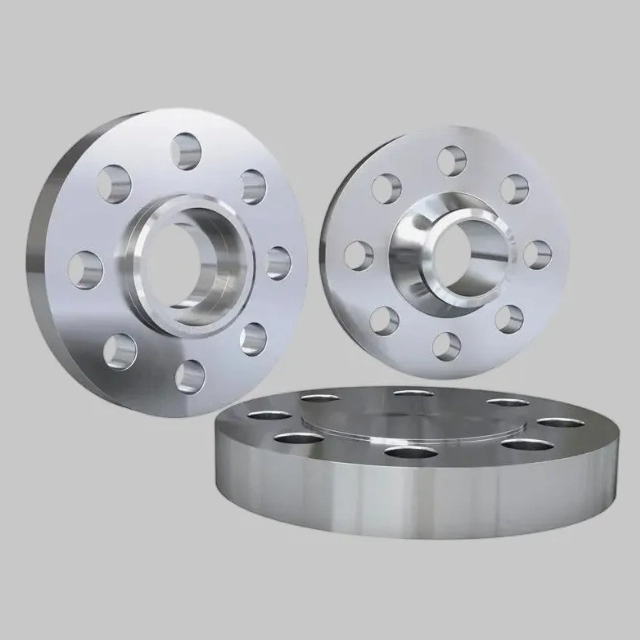
1. How Do Open Die Forging and Closed Die Forging Work?
Both processes shape metal through compressive forces, often at elevated temperatures. Their main difference lies in how the dies control material flow. This distinction affects the range of achievable shapes, production repeatability, tooling requirements, and the economics of each order.
How open die forging shapes metal
In open die forging, a heated workpiece sits between dies that do not completely enclose the material. The dies compress selected areas while the operator or handling system repositions the workpiece between strokes. This process gradually changes its dimensions and shape.
Common operations include upsetting, drawing out, piercing, and forming. Upsetting increases a workpiece’s cross-section while reducing its length. Drawing out reduces the cross-section and increases length. Combining these operations allows manufacturers to produce shafts, bars, rings, blocks, and other substantial components.
The process offers flexibility because the dies do not need to reproduce every contour of the finished part. However, achieving complex shapes may require several operations, careful handling, and experienced process control.
An open die forging process can suit components whose dimensions or production quantities do not justify dedicated impression tooling. Buyers should still confirm the supplier’s maximum workpiece size, available press capacity, handling limits, and achievable tolerances.
How closed die forging shapes metal
Closed die forging, also called impression die forging in many applications, uses shaped cavities to control the workpiece’s deformation. The upper and lower dies come together around the heated billet, directing the metal toward the required geometry.
The process may involve several stages rather than one final stroke. Preforming and blocker dies distribute material before the finishing die creates the final forged shape. This sequence helps fill complex features and reduces the risk of incomplete die filling.
In conventional closed die forging, excess material often escapes through the parting line and forms flash. A trimming operation removes this material after forging. Flash formation can help the die cavity fill, but it also increases material use and creates additional processing work.
A flashless process can reduce material waste, but it requires tighter control over billet volume and often imposes higher tooling loads. Manufacturers must evaluate its feasibility against part geometry, equipment capability, and production economics.
How equipment affects the two processes
Open die press forging commonly uses hydraulic presses or suitable forging hammers. Operators control the sequence of deformation to achieve the required dimensions and material condition.
Closed die press forging uses equipment that drives metal into a defined die cavity. Depending on the component and production requirements, manufacturers may use mechanical presses, hydraulic presses, screw presses, or forging hammers.
Equipment selection affects force, deformation speed, cycle time, die life, and process control. The press must provide enough capacity to form the component without exceeding the limits of the dies or the workpiece material.
Buyers should therefore evaluate the process and equipment together. A suitable forging method must match the component’s geometry, material grade, dimensions, and intended production volume.
2. What Are the Main Differences Between Open Die and Closed Die Forging?
The most important differences involve geometry, tooling, production volume, dimensional control, and the amount of machining required after forging. Neither method is universally better. Each offers advantages under specific manufacturing conditions.
Geometry and component size
Open die forging works well for large or relatively simple components. Typical examples include heavy shafts, large bars, blocks, rings, and parts that require substantial changes to their cross-section. The practical size limit depends on press capacity, heating equipment, material handling, and the forging facility.
Closed die forging suits parts with defined contours, ribs, bosses, shoulders, and other features that benefit from controlled die impressions. The process can produce more complex shapes with repeatable geometry, provided the die design and process sequence support complete filling.
However, closed die forging does not automatically produce a finished component. Holes, threads, precision surfaces, and tight dimensional features may still require machining. The final design should distinguish forged features from those created during secondary operations.
Tooling investment and production volume
Open die forging generally requires less dedicated tooling for each component design. Standard dies and auxiliary tools can support a range of workpiece shapes. This flexibility can reduce initial investment for large, low-volume, or customized orders.
Closed die forging requires dedicated dies designed around the part geometry. Tool design, manufacturing, trials, and validation add upfront cost and lead time. These expenses can become economical when production volume spreads tooling costs across many components.
A simple cost comparison should include more than the quoted price per forging. Buyers need to account for tooling, machining, inspection, scrap, heat treatment, and logistics.
For a small order of large steel shafts, open die forging may avoid unnecessary die investment. For thousands of identical shaped components, closed die forging may reduce recurring labor and machining costs enough to offset the initial tooling expense.
Dimensional consistency and machining
Open die forging relies on controlled deformation, operator technique, tooling arrangement, and measurement throughout the process. It can achieve the required dimensions, but complex contours and tight tolerances may demand more machining.
Closed die forging uses the die cavity to guide the workpiece toward a repeatable shape. This can reduce variation in forged contours and lower the machining allowance for suitable designs.
Actual dimensional accuracy depends on material shrinkage, die wear, forging temperature, process control, and the geometry itself. Buyers should specify tolerances on the drawing and confirm whether they apply to the as-forged condition or the finished machined part.
Material flow and mechanical performance
Both methods can refine the structure of suitable metals through plastic deformation. The resulting properties depend on alloy composition, initial material condition, deformation history, forging temperature, cooling, and heat treatment.
Closed die forging can direct metal flow around the contours of a component. Properly designed preforming stages help reduce incomplete filling and unfavorable flow patterns.
Open die forging can achieve substantial deformation in large billets and ingots. The sequence of upsetting and drawing operations can influence internal soundness and grain flow. The process requires careful control to avoid defects caused by unsuitable deformation conditions.
Neither method guarantees a particular mechanical property on its own. Buyers should specify the required tensile strength, yield strength, impact toughness, hardness, and any other relevant acceptance criteria. Material testing and process documentation should support those requirements.
Table 1. Open die forging vs. closed die forging
| Comparison factor | Open die forging | Closed die forging |
|---|---|---|
| Die arrangement | Workpiece remains open to material flow around the dies | Shaped cavities control material flow |
| Typical geometry | Shafts, bars, blocks, rings, and large components | Components with defined contours and more complex features |
| Tooling investment | Usually lower for individual designs | Higher due to dedicated dies |
| Production volume | Often suitable for low or varied quantities | Often attractive for repeat or high-volume production |
| Part-size flexibility | Can accommodate very large workpieces within facility limits | Limited by die size, press capacity, and handling capability |
| Dimensional consistency | Depends strongly on process control and subsequent machining | Die geometry supports repeatable forged contours |
| Machining requirements | May require more stock removal for complex final dimensions | Can reduce machining for suitable geometries |
| Material utilization | Depends on stock dimensions and machining allowance | Depends on billet design, flash, and trimming requirements |
| Design flexibility | High for changes that do not require dedicated tooling | Changes may require die modification or replacement |
| Lead-time considerations | Can avoid dedicated die manufacturing | Requires time for die design, manufacture, and validation |
This comparison provides a starting point rather than a universal ranking. Material grade, part dimensions, required quality, and the manufacturer’s capabilities can change the preferred option.
3. When Should Buyers Choose Open Die Forging or Closed Die Forging?
The best process follows from the part’s functional requirements and commercial production plan. Buyers should begin with the drawing, material specification, annual demand, and expected service conditions. They can then compare feasible manufacturing routes.
Choose open die forging for large or low-volume parts
Open die forging is often appropriate when the component is too large for practical impression tooling or when demand does not justify dedicated dies. It also suits parts that require substantial deformation without intricate external contours.
Common applications include:
- Heavy-duty industrial shafts and spindle blanks
- Large steel bars and forged blocks
- Components for power generation and heavy machinery
- Large rings or preforms for subsequent machining
- Custom or replacement components with limited order quantities
Consider a plant that needs several large alloy-steel shafts for specialized industrial equipment. Each shaft may have different finished lengths or machining requirements, while the main objective is to achieve the specified material condition and a suitable forged stock shape.
Open die forging may allow the supplier to adjust the workpiece dimensions without manufacturing a new set of dedicated dies. The buyer must still confirm the required deformation, material properties, ultrasonic inspection requirements, and machining allowance.
Choose closed die forging for repeatable complex shapes
Closed die forging is often preferable when a component has recurring production demand and a defined three-dimensional shape. The die cavity helps control the external geometry, while staged forging can distribute material into critical features.
Typical applications include:
- Connecting components and mechanical linkages
- Automotive and heavy-equipment parts
- Flanges, levers, and shaped fittings
- Valve and pump components, where the design and material permit forging
- Other load-bearing components requiring repeatable forged geometry
Imagine a manufacturer sourcing several thousand steel levers with a curved body and integral bosses. Machining every feature from solid bar could generate substantial material waste and long machining cycles.
A closed die process may form much of the required geometry before finishing operations. The buyer must compare the tooling investment against expected demand, machining savings, and the cost of maintaining consistent production quality.
Consider closed die drop forging when production economics support it
Closed die drop forging uses repeated hammer blows to drive heated metal into the die cavity. It can suit components that benefit from impact-based deformation and established forging sequences.
The method requires suitable hammer capacity, die design, billet preparation, and control of the forging temperature. Operators must manage the deformation sequence to avoid incomplete filling, laps, or other forging defects.
For repeat orders, a closed die drop forging route may provide an effective way to produce consistent component shapes. Buyers should compare it with press-based alternatives rather than assuming that all closed die processes offer the same cycle time, tooling life, or dimensional results.
The right choice depends on component geometry, alloy, size, required properties, and annual quantity. A supplier’s existing equipment and proven process experience can also influence cost and lead time.
Use open die press forging when controlled deformation matters
Open die press forging applies compressive force through a press while the operator or handling system positions the workpiece between successive operations. The process offers control over deformation and can support substantial reductions in cross-section.
Hydraulic presses are common in many open die applications because they can deliver controlled force over the working stroke. Actual capability depends on press tonnage, tooling, workpiece dimensions, and the required deformation schedule.
This method can suit large shafts, blocks, and preforms that need a defined material structure before machining or further processing. Buyers should ask how the supplier controls reduction ratios, forging temperatures, reheating, and intermediate dimensions.
Table 2. Example process selection by project type
| Project scenario | Process to evaluate first | Main reason | Key issue to confirm |
|---|---|---|---|
| Large custom shaft in a small quantity | Open die forging | Avoids dedicated impression tooling | Material properties, straightness, and machining allowance |
| High-volume shaped steel lever | Closed die forging | Repeatable geometry across recurring orders | Die cost, cycle time, and finishing operations |
| Large forged block for machining | Open die forging | Flexible stock dimensions and substantial deformation | Internal quality and ultrasonic testing |
| Repeated impact-loaded component | Closed die drop forging or another suitable closed die process | Die-guided shape and repeat production | Die filling, impact properties, and process capability |
| Complex component with strict dimensional requirements | Closed die forging followed by machining | Controlled forged geometry with precision finishing | Tolerances, datum strategy, and inspection plan |
| Prototype with likely design changes | Open die forging or another flexible route | Lower dependence on dedicated tooling | Whether the shape can be produced economically |
These examples help narrow the options, but final selection requires an engineering review. A process that works for one alloy or component size may not suit another design with similar external dimensions.
4. How Do Tooling, Machining, and Production Volume Affect Total Cost?
Purchase price alone rarely captures the full cost of a forged component. Buyers should evaluate tooling, material yield, machining, inspection, heat treatment, and delivery as parts of one manufacturing route.
Calculate tooling cost across expected demand
Closed die forging requires an upfront investment in die design and manufacture. Depending on part complexity, the supplier may need preforming dies, blocker dies, finishing dies, and trimming tools.
A useful comparison spreads the tooling cost across the expected production quantity. For example, a die investment of $24,000 represents $24 per part at 1,000 units, before considering the forging price and other costs. At 10,000 units, the same tooling represents $2.40 per part.
These figures illustrate the calculation rather than predict actual tooling prices. Buyers should use supplier quotations and realistic demand forecasts. They should also consider die maintenance, expected service life, replacement costs, and the likelihood of engineering changes.
Open die forging may reduce dedicated tooling costs, but its unit price can reflect longer processing time, skilled labor, material handling, and additional machining. Low tooling expense does not always mean lower total cost.
Compare material utilization and machining allowance
Forging stock must provide enough material to fill the required geometry and accommodate process allowances. Closed die forging may produce a shape close to the finished part, but flash and trimming can create material loss.
Open die forgings often retain additional stock for machining. The amount depends on the required tolerances, geometry, deformation route, and inspection requirements.
Buyers should compare the finished-part mass with the starting billet mass. They should also estimate the machining time and scrap generated when removing excess material. Material utilization matters especially for expensive alloy steels and large components.
A near-net-shape forging can reduce machining, but only when the geometry and process capability support it. Excessive attempts to minimize machining allowance may increase tooling complexity, defect risk, or dimensional variation.
Account for quality assurance and secondary operations
The required inspection plan can affect the total cost of both processes. Depending on the component’s application, quality requirements may include chemical analysis, mechanical testing, hardness checks, dimensional inspection, ultrasonic testing, magnetic particle testing, or other nondestructive examination.
Heat treatment may also be necessary to achieve specified mechanical properties. Machining, surface treatment, straightening, and final inspection can add further operations.
Buyers should define acceptance criteria before requesting quotations. Otherwise, two suppliers may quote different scopes even when they use the same nominal forging process.
A complete cost comparison should consider:
- Tooling design, manufacture, maintenance, and replacement
- Billet material and expected material yield
- Forging cycle time and production quantity
- Heat treatment and machining
- Inspection, testing, and documentation
- Packaging, transport, and delivery schedule
5. What Should Buyers Check Before Selecting a Steel Forging Manufacturer?
Process selection is only one part of supplier evaluation. Buyers also need evidence that the manufacturer can produce the specified material, dimensions, and mechanical properties consistently.
A capable industrial forging manufacturer should be able to explain its process capabilities and identify any limitations in the proposed manufacturing route. The supplier should also clarify how it will verify quality at each stage.
Confirm material and mechanical requirements
Provide the correct steel grade and applicable material standard. If the component operates under impact, cyclic loading, elevated temperatures, or pressure, state those conditions during the quotation stage.
Specify the required mechanical properties and heat-treatment condition. Where necessary, define impact-test temperature, hardness range, tensile properties, and other acceptance criteria.
The supplier should explain how the chosen forging route and subsequent heat treatment support those requirements. Avoid relying on broad statements about strength or grain flow without reference to the actual material and process.
Review drawings and manufacturing feasibility
A useful technical review identifies features that may complicate forging or increase machining costs. These include abrupt section changes, deep recesses, narrow ribs, thin projections, and areas that require tight tolerances.
For closed die parts, the supplier should review parting-line location, draft angles, fillet radii, flash design, and the number of forging stages. For open die parts, the review should cover workpiece dimensions, reduction sequence, handling requirements, and machining allowances.
Early engineering discussion can prevent unnecessary tooling changes after production begins. If the design remains flexible, compare alternative geometries that meet the functional requirements with fewer processing steps.
Verify quality control and traceability
Ask how the manufacturer controls billet identification, heating, forging temperature, deformation, heat treatment, and final inspection. Documentation should match the purchase specification and applicable standards.
For critical components, confirm whether the supplier can provide material certificates, heat-treatment records, mechanical-test results, dimensional reports, and nondestructive testing reports. Agree on sampling frequency and acceptance criteria before production.
Traceability becomes particularly important when multiple heats, batches, or processing routes contribute to one order. The manufacturer should explain how it links the finished parts to the relevant material and inspection records.
Evaluate production capacity and delivery risk
A supplier’s press tonnage alone does not establish its ability to deliver the order. Check maximum workpiece dimensions, available heating capacity, handling equipment, die-making resources, machining capacity, and inspection facilities.
Ask for a production schedule that separates tooling, material procurement, first-article approval, batch production, finishing, and final inspection. This makes it easier to identify risks before they affect the delivery date.
For recurring orders, discuss forecast visibility, batch sizes, tooling storage, maintenance responsibilities, and procedures for engineering changes. These arrangements can improve continuity across future production runs.
If the project involves a new component, provide the drawing, material grade, target quantity, operating conditions, and quality requirements when requesting a quotation. This allows the manufacturer to assess process feasibility and compare open die and closed die options on a consistent basis.
Frequently Asked Questions
Is open die forging stronger than closed die forging?
Neither process is automatically stronger. Mechanical performance depends on the alloy, deformation history, grain flow, heat treatment, defect control, and final geometry. Buyers should compare verified mechanical-test results and applicable acceptance criteria rather than selecting a process based on its name alone.
Is closed die forging more expensive than open die forging?
Closed die forging generally requires more upfront investment in dedicated tooling. It may offer lower recurring costs for suitable high-volume orders through repeatable shapes and reduced machining. Open die forging can be more economical for large, low-volume, or customized components that do not justify dedicated dies.
What is the difference between closed die press forging and closed die drop forging?
Closed die press forging uses a press to apply force through the forming stroke. Closed die drop forging uses hammer impact to deform the heated workpiece within shaped dies. Both can produce impression-forged components, but equipment behavior, cycle time, die design, and process suitability differ.
Which process is better for large steel shafts?
Open die forging is often a practical starting point for large shafts, especially when the component has a relatively simple shape or requires substantial deformation. Final selection depends on shaft dimensions, alloy, production quantity, required properties, and available equipment capacity.
Can closed die forging produce parts close to final dimensions?
Yes, closed die forging can produce near-net-shape components when the design and process support accurate die filling. Many parts still require machining for holes, threads, bearing surfaces, or tight tolerances. The supplier should define which dimensions apply to the forged condition and which apply after finishing.
What information should I provide for a forging quotation?
Provide a dimensioned drawing or three-dimensional model, steel grade, applicable standards, annual demand, batch size, mechanical-property requirements, heat-treatment condition, and inspection criteria. Include machining requirements, surface specifications, and delivery expectations where applicable.
Does open die forging require dedicated dies?
Open die forging typically uses more general-purpose tooling rather than a die cavity dedicated to the complete component geometry. Specialized tools may still be necessary for particular operations. The actual tooling requirement depends on the part shape, production method, and desired dimensions.
How should buyers compare quotations from different forging suppliers?
Confirm that each quotation covers the same material grade, dimensions, quantity, heat treatment, machining, testing, documentation, packaging, and delivery terms. Compare tooling charges separately and check whether the quoted price includes trimming, inspection, and nondestructive testing. A consistent scope makes the commercial comparison more reliable.
References
- ASM International, “Open-Die Forging,” ASM Handbook, Volume 14A: Metalworking: Bulk Forming. This technical reference discusses open die forging equipment, deformation, workpiece handling, and applications. https://doi.org/10.31399/asm.hb.v14a.a0003978
- ASM International, “Closed-Die Forging in Hammers and Presses,” ASM Handbook, Volume 14A: Metalworking: Bulk Forming. This reference covers closed die forging, preforming, material distribution, die design, and press and hammer processes. https://doi.org/10.31399/asm.hb.v14a.a0003979
- Open University, “Manufacturing: 3.7 Metal forging.” This educational resource explains the basic differences between open die and closed die forging, including workpiece deformation and flash formation. https://www.open.edu/openlearn/science-maths-technology/design-innovation/manufacturing/content-section-3.7
- ASM International, “Closed-Die Forgings,” Properties and Selection: Irons, Steels, and High-Performance Alloys. This handbook chapter discusses forging classifications, dimensional requirements, mechanical properties, and quality assurance. https://doi.org/10.31399/asm.hb.v01.a0001021
FWD Forgings supports industrial buyers seeking steel forgings for demanding manufacturing applications. By considering component geometry, material specifications, production quantities, and quality requirements, FWD Forgings helps customers assess suitable forging routes and plan production around their technical and commercial needs.