



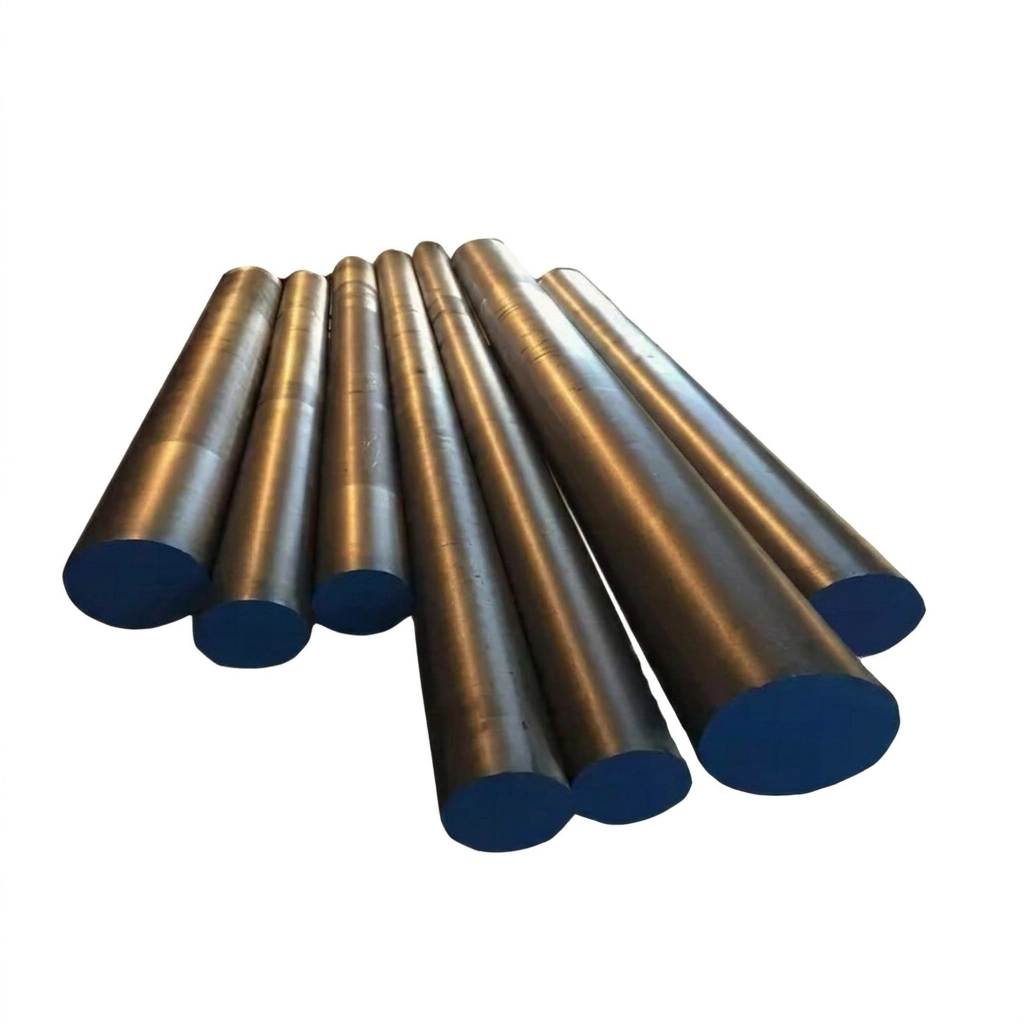
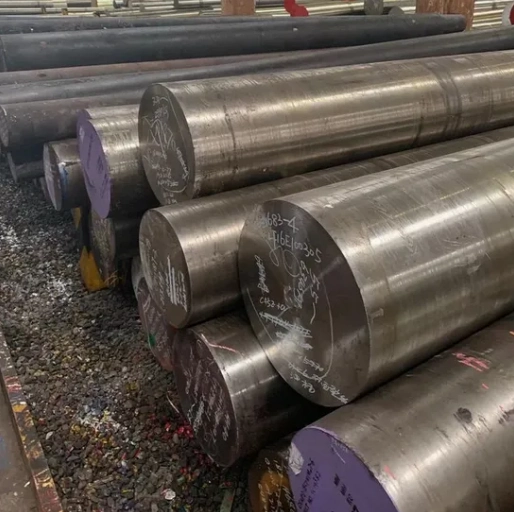
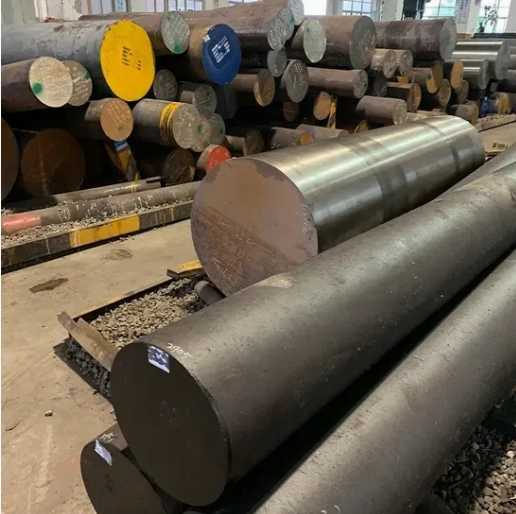
Quenched and Tempered Forged Round Bars
Comprehensive Description
Quenched & Tempered Tool Steel Bar Stock for Demanding Tooling
Quenched and tempered forged round bars represent pre-heat-treated, high-integrity steel bar stock specifically manufactured for mold makers, tool & die shops, and heavy component manufacturers. Raw tool steel in the as-cast or standard rolled state often exhibits coarse carbide segregation and uneven internal stress, which leads to dimensional distortion or premature cracking during post-machining heat treatment.
By subjecting forged tool steel bars to precise quenching and high-temperature tempering processes, FWD Forgings transforms the internal steel matrix into a tough, homogeneous tempered martensite structure. This pre-conditioned thermal state provides high yield strength, superior impact toughness, and predictable dimensional stability during subsequent CNC die-sinking, deep-hole drilling, and spark erosion (EDM) operations.
Key Features of Q&T Forged Round Bars
| Feature | Description |
| Optimized Mechanical Strength | Quenching and tempering develop superior yield points and high fatigue limits under severe dynamic loads. |
| Superior Machinability & Stability | Stress-relieved thermal processing reduces residual internal stresses, preventing warping or distortion during heavy metal removal. |
| Refined Carbide Distribution | Hot forging breaks down coarse eutectic carbides, improving impact toughness and polishability for optical mold surfaces. |
| Flexible Delivery Conditions | Supplied as quenched & tempered, normalized, or spheroidal annealed (265–310 HBS) depending on tooling requirements. |
| Custom Cut & Surface Options | Available in custom cut-to-length blocks or full-length bars with peeled, ground, or black forged surfaces. |
Applications
Our quenched and tempered forged tool steel bars serve as premium raw material stock across demanding tooling, die, and engineering sectors:
-
Plastic Injection & Compression Molds: High-polish mold bases, cores, and cavities forged from P20, 718H, S136, and NAK80 using high-density forged round bars.
-
Hot Forging & Die Casting Tools: Aluminum die-casting dies, hot extrusion tooling, and press dies forged from thermal-fatigue-resistant H13, SKD61, and 1.2344 grades.
-
Cold Stamping & Forming Dies: Heavy blanking punches, cold heading dies, shearing blades, and thread rolling dies using wear-resistant D2, Cr12MoV, and DC53 steels.
-
High-Strength Engineering Components: Custom shafts, wear plates, hydraulic rams, and high-load machinery parts utilizing pre-hardened C45, S45C, and alloy bar stock.
Material Grades & Technical Specifications
We supply an extensive selection of tool, die, and mold steel grades categorized by operational temperature and wear demands:
| Steel Grade Category | Popular Material Grades | Primary Performance Characteristics |
| Cold Work Die Steel | Cr12MoV, D2 (1.2379), Cr12, DC53, SKD11, DF-2 | High wear resistance, high compressive strength, exceptional cutting edge retention. |
| Hot Work Die Steel | H13 (1.2344), SKD61, 8407, 8418, 4Cr5MoSiV1 | High thermal shock resistance, resistance to thermal fatigue (heat checking), high red hardness. |
| Plastic Mold Steel | P20 (1.2311), 718H, S136 (1.2083), NAK80, NAK101 | Excellent mirror polishability, photo-etching capability, corrosion resistance, and uniform hardness. |
| Carbon & Engineering Steel | C45, S45C, SUS410, Custom Alloy Bases | Cost-effective structural and machine component stock offering good strength and weldability. |
Technical Specifications Summary
| Parameter Item | Technical Specification |
| Product Name | Quenched and Tempered Forged Round Bars / Tool & Mold Steel Bar Stock |
| Technique / Process | Open Die Forging + Hot Rolling + Cold Drawing |
| Round Bar Sizes | Hot Rolled: Diameter 10–60 mm | Hot Forged: Custom Diameters |
| Flat Bar Sizes | Hot Rolled: 12–60 × 100–610 mm | Hot Forged: 30–350 × Custom Widths |
| Length Options | 500 mm to 5,800 mm or Fixed Custom Lengths |
| Surface Conditions | Black Surface, Sandblasted, Grinded, Machined, Coated |
| Annealed Hardness | 265 ~ 310 HBS (Available in Annealed, Q&T, or Normalized condition) |
| Annual Capacity & Packing | 5,000 Tons/Year | Export Standard Seaworthy Packaging (HS Code: 72254010) |
Manufacturing Process
To guarantee defect-free internal structure and uniform hardness throughout heavy bar sections, FWD Forgings follows a controlled 4-step manufacturing route:
Quality Assurance
When purchasing pre-heat-treated tool steel bars for expensive mold and die manufacturing, internal soundness is paramount to prevent costly mold failure during production runs. FWD Forgings enforces strict testing protocols:
-
100% Ultrasonic Testing (UT): Every quenched and tempered bar is ultrasonically tested to SEP 1921 or ASTM A388 standards (Class C/c or D/d) to eliminate internal voids, segregation, and thermal cracks.
-
Cross-Section Hardness Profiling: Multi-point Rockwell (HRC) and Brinell (HB) testing from surface to center verifies depth of hardening and thermal uniformity.
-
Microstructure & Grain Size Inspection: Metallographic examinations confirm fine martensitic/tempered structure with minimal retained austenite and fine grain size (ASTM 8+).
-
Chemical Spectrographic Analysis: Confirms exact elemental compliance for alloy additions (Cr, Mo, V, Ni, Mn) matching DIN, AISI, and JIS tool steel standards.
-
Full Documentation: Inspection certs accompany all precision forged components and raw bar stock shipments.
Why Choose FWD Forgings
Integrated Thermal Processing Infrastructure
Operating as a specialized custom forging manufacturer, FWD Forgings manages in-house open die forging presses, continuous heat-treating furnaces, and deep-quench tanks capable of processing heavy-section round and flat bars up to 5,800mm in length.
Comprehensive Steel Grade Inventory & Capacity
With an annual production capacity of 5,000 tons, we support both quick-turn prototype tool steel orders and continuous volume supply contracts across cold work, hot work, and plastic mold steel grades.
Customized Dimensions & Machining Readiness
We eliminate unnecessary downstream material waste by supplying forged round and flat bars cut strictly to your pre-machined dimensions, complete with black, sandblasted, or ground surface finishes.
Frequently Asked Questions
Q1: What does "quenched and tempered" mean for forged round bars?
Quenched and tempered (Q&T) refers to a two-step thermal heat treatment process where the forged steel bar is heated above its transformation temperature, rapidly quenched in oil or water to form hard martensite, and then tempered at high temperatures to relieve stress and achieve the desired combination of core hardness and impact toughness.
Q2: What is the benefit of buying Q&T pre-hardened tool steel bars instead of annealed bars?
Pre-hardened Q&T tool steel bars allow toolmakers to machine the mold or die component directly to final dimensions without requiring post-machining heat treatment. This eliminates the risk of heat-treat distortion, scaling, cracking, or dimensional shrinking in finished molds.
Q3: What tool and mold steel grades are available for Q&T forged bars?
We offer extensive grades including Hot Work Steels (H13, SKD61, 1.2344), Cold Work Steels (D2, Cr12MoV, DC53, SKD11), Plastic Mold Steels (P20, 718H, S136, NAK80), and Carbon Steels (C45, S45C).
Q4: What size ranges and shapes are available?
We produce both round bars and flat bars. Round bars are available in hot rolled diameters from 10mm to 60mm and custom open die forged diameters. Flat bars range from 12–60 × 100–610mm (hot rolled) and 30–350mm thickness (hot forged), with cut lengths up to 5,800mm.
Q5: How are the bars packaged for export logistics?
All bars are packed using export-standard seaworthy wooden bundles or cases with anti-rust protective coatings under HS Code 72254010.