
Types of Forging: How Do Open-Die, Closed-Die, and Other Forging Processes Compare?
September 23, 2026
Forging can be divided into several major process types, with open-die, closed-die, upset, roll, ring, and precision forging among the most common. Each process controls metal flow in a different way. The choice depends on part geometry, material, dimensions, production volume, mechanical requirements, and machining allowance. For buyers sourcing forged products, understanding these differences helps define the right manufacturing route before requesting quotations. A simple shaft may require a different process from a complex gear or a large flange. The same steel grade can also require different equipment and process controls depending on the final component.
For industrial buyers, forging selection affects more than shape. It influences grain flow, dimensional accuracy, material utilization, tooling requirements, machining requirements, production capacity, and inspection procedures. A custom forging supplier therefore needs to evaluate the complete manufacturing route rather than selecting a forging method from the drawing alone.
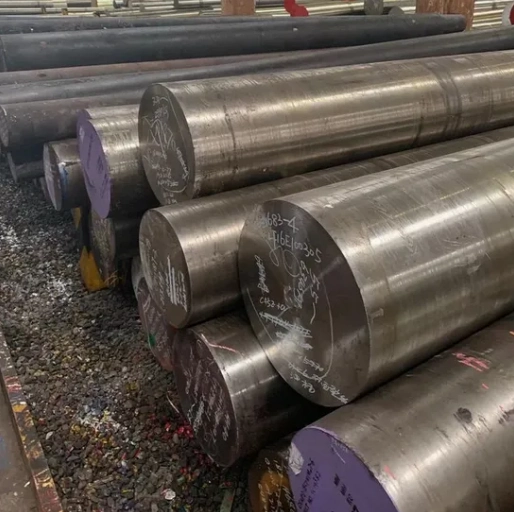
What Are the Main Types of Forging?
Forging is a metal forming process that uses compressive forces to reshape a heated, warm, or cold workpiece. The process changes the geometry while controlling material flow through dies, presses, hammers, or other forming equipment.
ASM International classifies forging through several process families, including open-die and closed-die forging. Other classifications include upset forging, ring rolling, rotary forging, radial forging, and precision forging.
The main categories used in industrial production include:
| Forging type | Typical equipment | Typical components | Production characteristics |
|---|---|---|---|
| Open-die forging | Hydraulic press, hammer | Shafts, blocks, large rings | Flexible geometry and large dimensions |
| Closed-die forging | Mechanical or hydraulic press, hammer | Gears, levers, hubs, connecting parts | Controlled shape and repeatability |
| Upset forging | Horizontal forging machine | Bolts, studs, shafts, fasteners | Increases cross-sectional area |
| Roll forging | Roll forging machine | Shafts, blades, tapered sections | Progressive material reduction |
| Ring rolling | Ring rolling mill | Rings, flanges, bearing rings | Produces seamless ring shapes |
| Precision forging | Precision press and dies | Gears, automotive parts | Reduced machining allowance |
| Cold forging | Mechanical press | Fasteners and small components | High dimensional consistency |
The table provides a general production guide. Actual equipment selection depends on material grade, component size, tolerances, annual volume, and required properties.
Open-Die Forging
Open-die forging forms metal between dies that do not fully enclose the workpiece. The operator or automated system controls the workpiece position during deformation.
This process suits large components and parts with relatively simple geometries. Shafts, discs, blocks, rings, and other heavy sections often use this approach.
Large steel components may require several deformation stages. These stages can reduce the cross-section and increase the length or diameter in controlled steps.
Open-die forging also offers flexibility when buyers need different dimensions from the same basic material grade. Tooling requirements are generally less complex than those for closed-die production.
For large industrial components, open die forging can therefore provide a practical route when full die enclosure is unnecessary.
Closed-Die Forging
Closed-die forging uses shaped dies that constrain the workpiece during deformation. The dies contain cavities that correspond to the required component geometry.
The process can produce more complex shapes than basic open-die operations. It also provides better control over repeatable dimensions when the tooling and process parameters are properly established.
Closed-die forging often suits medium and high production volumes. Tooling costs become easier to justify when the same component requires consistent production over a long program.
Typical products include automotive components, industrial levers, hubs, connecting components, and various structural parts.
ASM International notes that closed-die forgings involve important considerations such as die design, material control, dimensional tolerances, machining allowances, and process control.
For buyers, this means the forging quotation should cover more than the finished piece price. Die investment, trial production, heat treatment, machining, inspection, and expected production volume all influence the total cost.
How Does Open-Die Forging Differ From Closed-Die Forging?
The difference between open-die and closed-die forging starts with how the tooling controls metal flow.
In open-die forging, the dies contact selected surfaces while leaving other areas unrestricted. The manufacturer changes the position of the workpiece between forming operations.
Closed-die forging uses cavities to guide the material toward a defined shape. The process therefore provides greater geometric control.
Neither method applies to every component. A large rotor shaft may need open-die forging because of its dimensions. A small automotive gear may require closed-die forging because of its complex geometry and production volume.
Geometry and Part Size
Open-die forging works well for large parts with simple or moderately complex shapes. It can accommodate workpieces that exceed the practical dimensions of many closed dies.
Closed-die forging suits smaller and medium-sized components where the required geometry fits within the available die cavity.
Part weight also matters. Heavy duty forged components may require large presses, cranes, manipulators, furnaces, and handling systems.
Tooling Requirements
Open-die processes can use relatively simple tooling. This reduces the need for dedicated dies when the component geometry remains straightforward.
Closed-die production requires cavity design and die manufacturing. Complex parts may require blocker dies, finisher dies, trimming dies, and additional tooling.
Tool design also influences material flow. Poorly designed cavities can cause incomplete filling, folds, excess flash, or dimensional variation.
Production Volume
Production volume is another important factor.
For a low-volume custom project, open-die forging may offer more flexibility. A manufacturer can adjust dimensions without producing a highly complex dedicated die set.
For repeated production, closed-die forging can support consistent geometry across large quantities. The initial tooling investment becomes part of the overall production economics.
Machining Allowance
Forging does not always produce the final machined dimensions. Many forged steel parts require turning, milling, drilling, grinding, or other secondary operations.
Open-die forgings often require more machining allowance because the process provides less geometric definition.
Precision and closed-die processes can reduce material removal when the design and process support near-net-shape production.
Which Forging Process Should Buyers Choose for Different Components?
A forging process should match the component rather than the other way around. Buyers should begin with the engineering requirements and then evaluate the available manufacturing routes.
For example, a long transmission shaft may require controlled grain flow along its main axis. A large forged shaft can therefore use an open-die process followed by heat treatment and machining.
A smaller gear has different requirements. It needs defined teeth, dimensional consistency, and controlled material distribution. A closed-die process may therefore offer a more suitable production route.
Shafts and Large Rotating Components
Shafts often require a combination of deformation control, heat treatment, machining, and inspection.
Large shafts may require multiple forging reductions. The process can progressively refine the section while controlling the final dimensions.
For industrial buyers, shaft forgings can cover applications such as power transmission, industrial machinery, energy equipment, and heavy rotating systems.
The specification should define material grade, finished dimensions, forging ratio where applicable, heat treatment, mechanical properties, ultrasonic testing, dimensional tolerances, and machining allowance.
Flanges and Pressure Components
Forged flanges require controlled dimensions and suitable material properties for their intended pressure and temperature conditions.
The production route depends on flange diameter, thickness, material grade, quantity, and applicable standards.
Forged pipe flanges can serve applications in piping, process equipment, energy systems, and industrial plants.
For procurement teams, flange specifications should identify the applicable standard, pressure class, facing type, material grade, heat treatment, inspection requirements, and dimensional tolerances.
Gears and Drive Components
Gears require accurate geometry and reliable mechanical properties. The forging process must therefore support the required material distribution before machining and heat treatment.
Gear forgings can provide a suitable starting form for industrial transmission components and other power-transfer systems.
The final manufacturing route may include forging, trimming, heat treatment, shot blasting, machining, tooth cutting, grinding, and inspection.
The best process depends on the gear size, material, tooth geometry, production quantity, and final accuracy requirements.
What Materials and Equipment Affect Forging Selection?
Material selection strongly affects forging temperature, deformation resistance, tooling requirements, and heat treatment.
Steel remains one of the most widely used materials for industrial forging. Carbon steels, alloy steels, stainless steels, and other grades can require different process parameters.
A manufacturer must control the relationship between material temperature and deformation. Excessive temperature can create unwanted oxidation or grain growth. Insufficient temperature can increase forming loads and reduce forgeability.
Forging Equipment
Common forging equipment includes hydraulic presses, mechanical presses, screw presses, hammers, horizontal forging machines, and specialized forming systems.
ASM International identifies hammers and several types of presses as major forging equipment categories. It also covers specialized machines for processes such as ring rolling, horizontal forging, rotary forging, and radial forging.
Equipment selection depends on:
- Component size
- Material strength at forging temperature
- Required deformation
- Production volume
- Part geometry
- Required dimensional accuracy
- Automation level
- Available die configuration
Hydraulic presses offer controlled forming force and stroke control. Mechanical presses can provide high production rates for suitable components. Hammers apply repeated impact energy and can suit certain hot forging applications.
The equipment should match the process window. A machine with excessive capacity may increase capital and operating costs. Insufficient capacity can create incomplete forming or unstable production.
Heat Treatment and Secondary Processing
Forging often represents only one stage in the manufacturing route.
Depending on the material and specification, the component may require normalizing, annealing, quenching, tempering, or other heat treatment.
Machining may follow heat treatment to achieve final dimensions. Surface treatment, coating, shot blasting, or grinding may also apply.
Quality planning should therefore cover the complete production chain rather than the forging operation alone.
How Do Forging Types Affect Cost and Production Planning?
Forging cost depends on several connected variables. The cheapest process for one component may not remain economical for another.
Tooling represents a major difference between open-die and closed-die production. Open-die projects can often use simpler tooling, while closed-die production may require dedicated cavity development.
Production volume changes the calculation. A high-volume program can spread tooling costs across many parts. A low-volume project may favor a more flexible process.
Material utilization also matters. A forging process that produces a shape close to the final geometry can reduce machining stock and material waste.
However, reducing machining allowance requires tighter process control. Buyers should evaluate the total manufacturing cost instead of focusing only on the initial forging price.
Example: Low-Volume Industrial Shaft
Consider a 2.5-meter alloy steel shaft for industrial equipment.
The component has a relatively simple cylindrical geometry. Annual demand remains low, but the shaft requires controlled mechanical properties and ultrasonic inspection.
A manufacturer may select open-die forging because the component size and production volume do not justify complex closed-die tooling.
The process may include billet heating, upsetting, drawing, controlled reduction, heat treatment, ultrasonic inspection, and rough machining.
Example: High-Volume Gear Component
Now consider a compact steel gear used in industrial transmissions.
The component has complex geometry and a large annual production volume. Dimensional repeatability also matters.
A closed-die process may provide better control over the basic shape. The production route can then continue through trimming, heat treatment, machining, tooth cutting, and final inspection.
The comparison shows why process selection must consider the entire production program.
What Should Buyers Check When Selecting a Custom Forging Supplier?
A capable custom forging supplier should provide more than forming capacity. Buyers should evaluate the supplier’s ability to control materials, tooling, process parameters, heat treatment, inspection, and documentation.
The first step is reviewing the component drawing. The supplier should understand critical dimensions, tolerances, material specifications, mechanical properties, surface requirements, and inspection criteria.
Next, the supplier should propose a suitable forging process. The proposal should explain why the selected process matches the component geometry and production volume.
Key Supplier Evaluation Points
A practical supplier evaluation can include:
- Material sourcing and traceability
- Forging equipment and capacity
- Tooling design and manufacturing
- Heat treatment capability
- CNC machining capacity
- Dimensional inspection
- Non-destructive testing
- Mechanical property testing
- Production traceability
- Export and packaging capability
Quality documentation also matters for industrial procurement. Depending on the application, buyers may require material certificates, heat treatment records, dimensional reports, ultrasonic testing reports, magnetic particle testing, hardness results, and mechanical test data.
A supplier should also clarify whether critical operations remain in-house or involve external subcontractors.
For regulated or safety-critical applications, traceability becomes particularly important. Material identity should remain connected to production records throughout the manufacturing process.
How Do Forged Products Compare Across Different Applications?
Forged products appear across many industrial sectors because the process can produce components with controlled material flow and suitable mechanical properties.
Applications range from general machinery to energy, transportation, construction equipment, marine systems, and heavy industrial equipment.
The appropriate process depends on the service conditions.
| Application | Common forged component | Possible forging process | Typical secondary operations |
|---|---|---|---|
| Power transmission | Shafts, gears | Open-die, closed-die | Heat treatment, machining |
| Oil and gas | Flanges, rings | Open-die, ring rolling | Heat treatment, NDT |
| Construction equipment | Pins, links, shafts | Closed-die, upset | Machining, heat treatment |
| Industrial machinery | Hubs, discs, shafts | Open-die, closed-die | Machining, inspection |
| Automotive | Connecting rods, gears | Closed-die | Trimming, machining, heat treatment |
| Heavy equipment | Large shafts, discs | Open-die | Heat treatment, machining |
| Pressure systems | Flanges, rings | Open-die, ring rolling | Machining, NDT |
The table provides general examples rather than fixed process rules. Engineering requirements should determine the final production route.
What Are the Most Important Forging Quality Controls?
Quality control starts before the metal enters the forging press.
Material verification confirms that the billet or bar meets the specified grade. Heating control then ensures that the workpiece reaches the required processing range.
During forging, operators monitor deformation, die condition, workpiece temperature, lubrication, and dimensional development.
After forging, the manufacturer may perform trimming, heat treatment, cleaning, and inspection.
Dimensional Inspection
Dimensional inspection confirms that the forged blank or machined component meets the drawing requirements.
Critical dimensions may require coordinate measuring machines, gauges, micrometers, calipers, or specialized inspection fixtures.
Mechanical Testing
Mechanical testing can include tensile strength, yield strength, elongation, reduction of area, hardness, and impact testing.
The required tests depend on the material specification and end-use application.
Non-Destructive Testing
NDT helps identify internal or surface discontinuities without destroying the component.
Common methods include ultrasonic testing, magnetic particle inspection, dye penetrant inspection, and visual inspection.
Large forged steel components may require ultrasonic testing to identify internal indications. The acceptance criteria should come from the applicable specification or customer requirement.
Process Documentation
A reliable quality system connects inspection results with material and production records.
This approach helps buyers trace the component back to its material heat, forging batch, heat treatment cycle, and inspection records.
For custom metal forgings, traceability can be as important as dimensional accuracy because it supports long-term quality management.
FAQ
What are the main types of forging?
The major types include open-die forging, closed-die forging, upset forging, roll forging, ring rolling, precision forging, and cold forging. Specialized processes include radial, rotary, orbital, and isothermal forging.
What is the difference between open-die and closed-die forging?
Open-die forging forms metal between dies that do not fully enclose the workpiece. Closed-die forging uses shaped cavities to control the material during deformation.
Open-die forging often suits large and relatively simple components. Closed-die forging generally suits components with defined geometry and repeated production requirements.
Which forging process is suitable for large shafts?
Open-die forging often suits large shafts because it can accommodate substantial workpiece dimensions. The final selection depends on shaft diameter, length, material, production volume, and required properties.
Are forged steel parts stronger than cast parts?
Forging can produce favorable grain flow and mechanical properties. However, the final performance depends on material, forging process, heat treatment, geometry, and quality control.
A direct comparison should therefore use the actual material grade and applicable mechanical specifications.
What is a custom forging supplier?
A custom forging supplier manufactures components according to customer drawings, specifications, samples, or engineering requirements.
The supplier may handle material sourcing, forging, heat treatment, machining, inspection, and documentation.
What information should buyers provide for a forging quotation?
A useful RFQ should include the drawing, material grade, annual quantity, order quantity, tolerances, surface requirements, heat treatment requirements, inspection standards, packaging requirements, and delivery destination.
Additional information can include service conditions and applicable industry standards.
Can one forging method produce every type of component?
No. Forging methods have different capabilities and limitations.
Large shafts, small gears, seamless rings, flanges, and complex structural components may require different processes and equipment.
The right method depends on geometry, material, production volume, and performance requirements.
References
The technical principles in this article draw on established metal forming references, including ASM International publications covering open-die forging, closed-die forging, forging machinery, deformation processes, and process variables. ASM International describes open-die and closed-die forging as major forging classifications and also covers specialized methods such as ring rolling, radial forging, and rotary forging.
Additional technical background can be found in the ASM Handbook and related technical publications:
- ASM International – Closed-Die Forgings
- ASM International – Open-Die Forging
- ASM International – Forging Machinery, Dies, and Processes
- ASM International – Forging Processes: Variables and Descriptions
FWD Forgings focuses on supplying engineered forged products for industrial applications, including custom forged parts, forged steel parts, steel forging parts, and heavy duty forged components. The production approach can cover process selection, material control, forging, heat treatment, machining, and inspection according to project requirements. For buyers seeking custom metal forgings, the objective is to match the forging route with the component’s geometry, material, production volume, and required performance.