
Open Die vs Closed Die Forging: Which Process Is Right for Your Steel Parts?
September 16, 2026
Open die and closed die forging serve different production requirements, so the right choice depends on part geometry, size, production volume, material utilization, dimensional requirements, and tooling economics. Open die forging works well for large, simple, or low-volume components that require controlled deformation without a fully enclosed cavity. Closed die forging uses shaped dies to control metal flow and form more complex geometries with tighter dimensional control. ASM International classifies both as major forging processes and highlights differences in tooling, deformation, tolerances, machining allowances, and process design.
For procurement teams, the decision should not begin with the question of which process is more advanced. It should begin with the finished component. A 2-ton shaft and a 2 kg connecting component have very different forging requirements. One may benefit from open die processing, while the other may justify dedicated closed dies.
The same principle applies to custom orders. A low-volume project with frequent design changes may favor open die production because tooling requirements remain limited. A high-volume program with repeatable geometry may justify closed die tooling because the dies can reproduce the required shape through controlled metal flow.
This distinction directly affects the cost and manufacturing route for forged products. Buyers should consider the complete production chain rather than comparing forging quotations alone.
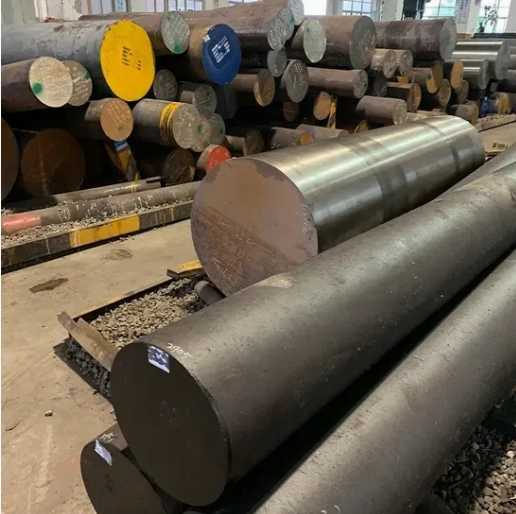
What Is the Difference Between Open Die and Closed Die Forging?
The fundamental difference lies in how the dies control the workpiece during deformation.
In open die forging, the workpiece remains accessible between relatively simple dies. The dies compress or shape selected areas while leaving other surfaces unconstrained. Operators or automated handling systems reposition the workpiece between forging passes.
ASM International describes open die forging as a deformation process involving discontinuous material flow. The process can include upsetting, drawing out, cogging, and other controlled deformation operations.
Closed die forging uses shaped die cavities. The heated billet enters the die set, and the dies force the material into a defined geometry. Depending on the design, the process may use preforming, blocker, and finishing operations.
ASM notes that closed die forging depends heavily on preform design and material distribution. Die geometry, friction, lubrication, forging temperature, and deformation conditions all influence the final result.
Open Die Forging
Open die forging typically suits parts with relatively straightforward cross-sections or large dimensions.
Common examples include:
- Shafts
- Discs
- Cylinders
- Blocks
- Rings
- Large bars
- Flanges
- Heavy equipment components
The process can also reduce the cross-section of large billets through repeated deformation.
For example, a manufacturer requiring a large forged shaft may start with a steel billet or ingot. The forging process progressively reduces the section and develops the required diameter and length.
The final part may then undergo heat treatment and machining.
This approach provides flexibility when the finished geometry does not justify a dedicated cavity.
Closed Die Forging
Closed die forging confines the heated workpiece within shaped dies.
The die cavity controls the external geometry. This makes the process suitable for components with multiple features, contours, bosses, shoulders, or other defined shapes.
Typical examples include:
- Connecting components
- Automotive parts
- Industrial levers
- Flanges with defined geometry
- Forks
- Yokes
- Hubs
- Mechanical linkage components
Closed die forging can reduce the amount of machining needed after forging when the die design closely approaches the finished geometry.
However, the tooling investment is greater. The die must reproduce the required geometry and withstand repeated forging loads.
When Should Buyers Choose Open Die Forging?
Open die forging becomes attractive when component size, low production volume, or geometry flexibility matters more than near-net shape.
Large steel components often create practical limitations for closed die tooling. A very large die set requires substantial equipment capacity, tooling material, handling capability, and maintenance.
Open die processing can avoid some of these requirements.
Large Components
Large shafts, discs, rings, blocks, and similar components often require significant deformation.
An open die process allows the forging team to control deformation across different sections of the workpiece.
The process can also accommodate changes in dimensions during production.
For example, consider a large industrial shaft with a diameter that changes along its length. A series of open die operations can progressively form the required sections.
A closed cavity would require much more complicated tooling.
Low and Medium Production Volumes
Tooling economics also influence the decision.
Open die forging usually requires simpler tooling. This makes it practical when the production quantity does not justify dedicated closed dies.
Suppose a customer needs 30 large steel shafts with a custom diameter and length.
The tooling cost per piece would become significant if the project required expensive dedicated dies.
Open die forging may provide a more flexible manufacturing route.
The final economics still depend on material size, forging time, machining, inspection, heat treatment, and production capacity.
Custom Geometry
Open die processes can accommodate dimensional changes without completely redesigning a die cavity.
This flexibility is valuable for engineering projects where the final geometry may evolve.
It also supports custom forged parts for machinery, energy equipment, transportation systems, and other industrial applications.
Heavy-Duty Components
Large industrial equipment often requires components with substantial cross-sections.
These parts may include large shafts, hubs, discs, blocks, and structural components.
Open die forging provides a practical route for many of these heavy-duty applications because the process does not require the entire component to fit inside a closed impression.
The exact forging route depends on material grade, section size, reduction requirements, and final mechanical properties.
When Is Closed Die Forging More Suitable?
Closed die forging becomes more attractive when geometry, repeatability, production volume, and material utilization justify dedicated tooling.
The die cavity establishes the external shape during forging.
This makes the process suitable for components with more detailed geometries.
Complex Part Geometry
A closed die can form multiple features during a controlled sequence.
For example, a mechanical yoke may include arms, bosses, transitions, and defined radii.
Machining the entire shape from a solid bar could create substantial material waste.
Closed die forging can form much of the geometry before machining.
This can reduce the amount of material removed during downstream operations.
Higher Production Volumes
Tooling costs become easier to justify as production quantity increases.
Assume a customer requires 50,000 steel components over several years.
A dedicated die set may require a significant initial investment. However, that investment can be distributed across a large production quantity.
The economics may therefore favor closed die forging.
This is one reason the process appears frequently in automotive and industrial component production.
Repeatable Geometry
Closed dies provide a defined cavity for each forging operation.
This supports repeatable part geometry when the process remains within controlled parameters.
The result can reduce machining variation and simplify downstream production.
However, closed die forging does not eliminate quality control requirements.
Temperature, billet volume, lubrication, die wear, forging load, and material flow still require control.
Near-Net Shape Opportunities
Closed die forging can produce shapes that approach the final component geometry.
The exact achievable condition depends on material, geometry, forging process, tooling, and dimensional requirements.
Some components still require substantial machining after forging.
Others can achieve relatively close dimensions and require only selected finishing operations.
ASM International discusses close-to-finish factors, machining allowances, dimensional accuracy, and tolerances as important considerations in closed die forging.
How Do Open Die and Closed Die Forging Compare?
The difference becomes clearer when procurement teams compare the processes against common purchasing criteria.
| Factor | Open Die Forging | Closed Die Forging |
|---|---|---|
| Tooling | Relatively simple tooling | Dedicated shaped dies |
| Part size | Well suited to large components | More dependent on die and press capacity |
| Geometry | Simple to moderately complex | Moderate to complex |
| Production volume | Low to medium volume | Medium to high volume |
| Design flexibility | High | More dependent on die design |
| Initial tooling cost | Generally lower | Generally higher |
| Repeatability | Depends strongly on process control | Strong potential for repeatable geometry |
| Machining allowance | Often greater | Can be reduced with suitable die design |
| Material utilization | Depends on stock size and machining | Can improve with preform design |
| Customization | Flexible for changing dimensions | Changes may require die modification |
| Typical applications | Large shafts, discs, rings, blocks | Automotive, machinery, yokes, levers, shaped components |
Caption: General comparison of open die and closed die forging for industrial steel components.
Neither process automatically provides lower total cost.
The correct comparison should include tooling, raw material, forging time, machining, heat treatment, inspection, handling, and expected production quantity.
For this reason, procurement teams should request a complete manufacturing route from the forging supplier.
How Do Material, Geometry, and Production Volume Affect the Decision?
The best forging process depends on the interaction between several variables.
A supplier should evaluate the complete component rather than one isolated specification.
Material Grade
Steel chemistry influences forgeability, deformation behavior, heat-treatment requirements, and final mechanical properties.
Carbon steels and alloy steels may require different forging temperature ranges and process controls.
Certain alloy steels also require careful temperature management to prevent undesirable metallurgical changes.
The selected steel grade should therefore be confirmed before the forging route is finalized.
Material certification should also match the customer’s applicable specification.
Component Size
Size is one of the strongest factors favoring open die forging.
A large shaft may be impractical for conventional closed die tooling.
A smaller shaped component may fit efficiently within a closed die.
However, size alone does not determine the process.
A large-volume program may justify specialized closed die equipment for components that fall within the available forging envelope.
Part Complexity
Geometry determines how effectively the dies can control metal flow.
Simple cylindrical components may require only a small number of forging operations.
A component with multiple branches or abrupt transitions may require carefully designed preforms.
Closed die forging often involves blocker or preform stages before the final cavity. ASM International specifically identifies preform and blocker design as important elements in closed die forging.
Production Quantity
Production volume changes the economics of tooling.
A small batch of custom metal forgings may not justify dedicated dies.
A large repeat order can change the calculation.
For example, producing 100 customized steel parts may favor a flexible process.
Producing 100,000 identical components can justify a dedicated die program.
The supplier should therefore calculate tooling cost across the expected production life.
Machining Requirements
The forging process should also consider the machining route.
If the finished component requires extensive CNC machining, the forging may need additional stock.
If the component requires only limited machining, a closer forged geometry may provide greater value.
This relationship should be discussed during design review.
How Does Forging Design Affect the Final Part?
Forging is not simply a matter of pressing steel into a shape.
Metal flow, section changes, radii, draft, flash, machining allowance, and die separation all influence manufacturability.
Metal Flow
Controlled metal flow helps distribute deformation through the workpiece.
Poor flow can create laps, underfilling, folds, or other defects.
In open die forging, the operator or process system controls deformation through a sequence of reductions.
In closed die forging, die geometry guides the material toward the cavity.
ASM’s forging references emphasize metal flow, tooling geometry, friction, temperature, and material characteristics as interconnected process variables.
Draft and Radii
Closed die components usually need geometry that allows the forged part to release from the die.
Sharp internal corners can create difficult metal-flow conditions.
Suitable radii can help material move through the cavity.
The design should also consider machining allowances and dimensional tolerances.