
Why is 4140 Steel Forging the Preferred Choice for High-Stress Industrial Components?
October 31, 2026
4140 steel forging achieves widespread adoption because it offers an exceptional balance of strength, toughness, and wear resistance. Engineers select this chromium-molybdenum alloy for heavy-duty mechanical parts that endure severe loads, impact, and fatigue. The forging process refines the internal grain structure, eliminating internal voids and aligning metal flow lines with component contours. This structural integrity ensures reliable performance in demanding sectors like mining, oil and gas, and heavy machinery. Component manufacturers rely on this material to withstand harsh operating environments without premature failure.
Metallurgical Composition and Alloy Characteristics of 4140 Steel
The chemical composition of AISI 4140 steel defines its mechanical capabilities. Chromium provides good hardness penetration and wear resistance. Molybdenum increases toughness, structural strength, and high-temperature resistance. Carbon provides the fundamental hardening capability during thermal processing. Manganese aids in deoxidation and enhances hardenability during quenching operations. Silicon contributes to overall steel strength and deoxidation efficiency. Metallurgists carefully control these elements within strict percentage ranges to ensure consistent batch performance. The nominal composition creates a versatile medium-carbon alloy suitable for diverse hardening methods. Raw material selection directly impacts the final performance of heavy industrial components.
Mechanical Properties and Heat Treatment Dynamics
Heat treatment transforms raw 4140 forgings into high-strength engineering components. Quenching and tempering allow engineers to tailor hardness and tensile strength to specific project needs. The microstructure transitions from austenite to martensite during rapid cooling in oil or water. Subsequent tempering relieves internal stress while restoring ductility and impact resistance. Proper thermal management prevents cracking and distortion in complex geometries. The table below outlines typical mechanical properties of quenched and tempered 4140 forged steel.
| Mechanical Property | Condition / Specification | Typical Metric Value | Imperial Equivalent |
| Tensile Strength | Quenched & Tempered | 850 – 1000 MPa | 123,000 – 145,000 psi |
| Yield Strength | Quenched & Tempered | 650 – 850 MPa | 94,000 – 123,000 psi |
| Elongation | 50mm gauge length | 12% – 18% | 12% – 18% |
| Reduction of Area | Minimum value | 45% – 55% | 45% – 55% |
| Hardness (HB) | Brinell Hardness | 280 – 320 HB | 280 – 320 HB |
Table 1: Typical mechanical properties of 4140 alloy steel forgings after heat treatment.
Core Industrial Applications and Component Integration
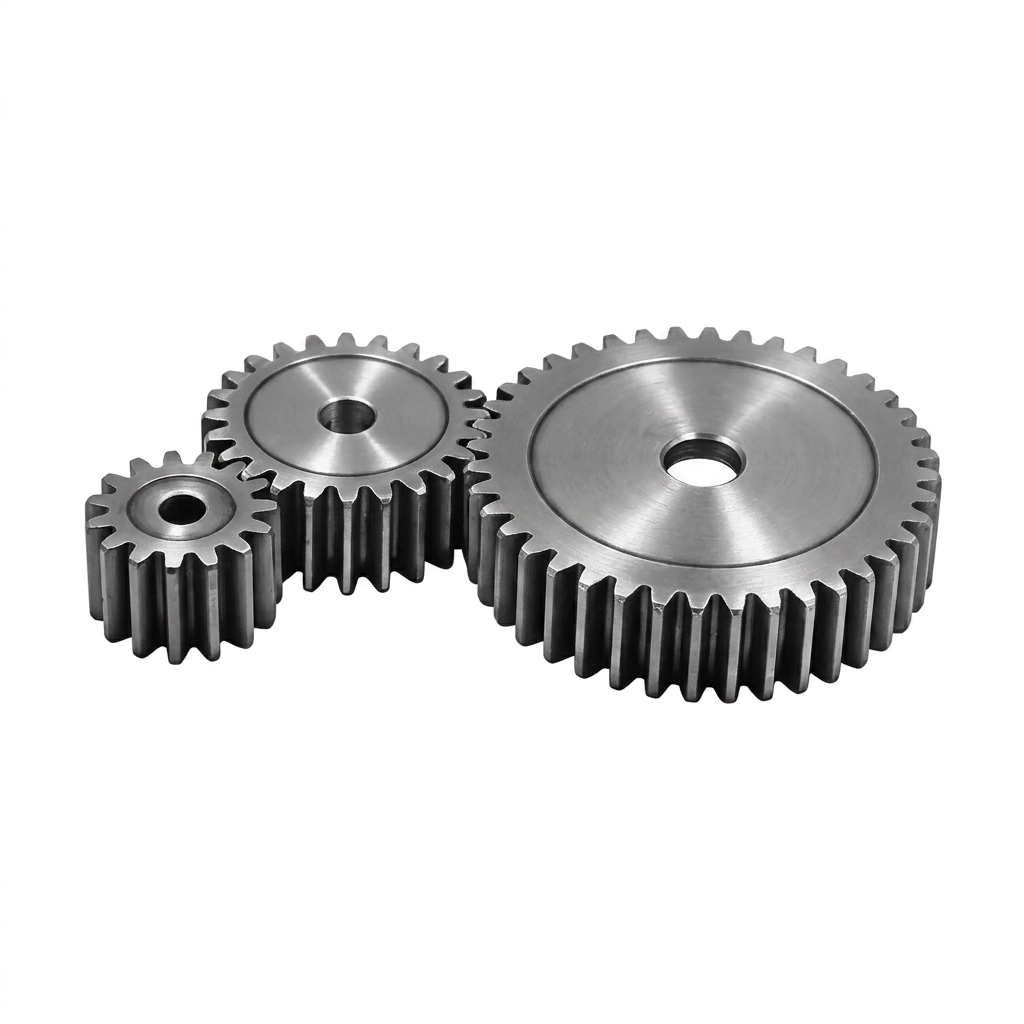
Heavy industries require structural components that maintain dimensional stability under extreme stress. Power transmission systems frequently utilize forged drive shafts made from 4140 steel to handle high torsional loads. Heavy machinery gearboxes depend on precision steel gear blanks to transmit high torque efficiently without tooth breakage. Industrial equipment builders also utilize quenched and tempered forged round bars as stock material for custom pins, bolts, and structural connectors. Mining equipment, wind turbines, and oil drilling rigs operate continuously using components forged from this robust alloy. Each application demonstrates how proper material selection prevents costly downtime in critical operations.
Ready to source reliable, custom-engineered components for your next project? Contact our engineering team today to discuss your technical specifications and production requirements.
The Manufacturing Workflow from Ingot to Finished Forging
Production begins with rigorous raw material inspection to verify chemical composition. Technicians heat steel billets in industrial furnaces to precise forging temperatures. Hydraulic presses and hammers shape the hot metal through progressive forming stages. This hot working operation breaks down cast dendritic structures and refines grain size. Technicians then transfer the hot forgings to controlled cooling beds or direct quench tanks. Machining centers remove excess stock and finish critical tolerance surfaces using CNC technology. Every production step follows strict quality protocols to guarantee dimensional accuracy and surface integrity.
Quality Assurance and Metallurgical Testing Protocols
Industrial buyers demand rigorous verification before approving critical forged components. Quality control teams perform ultrasonic testing to detect internal defects like voids or inclusions. Magnetic particle inspection reveals surface and near-surface cracks following machining operations. Spectrometric analysis confirms that raw material batches match exact customer specifications. Tensile and impact testing machines verify that heat-treated parts meet required mechanical standards. Dimensional verification utilizes advanced coordinate measuring machines to check tight tolerances. These comprehensive testing procedures ensure that every component performs safely in high-pressure field conditions.
Frequently Asked Questions
What makes 4140 steel better than standard carbon steel for forgings? 4140 alloy steel contains chromium and molybdenum, which significantly improve hardenability, fatigue strength, and wear resistance compared to plain carbon steels.
Can 4140 forged components be welded successfully? Welding is possible but requires strict preheating and post-weld heat treatment to prevent cracking in the heat-affected zone due to the alloy’s high hardenability.
What is the typical hardness range for 4140 forgings? Standard heat treatments typically achieve a Brinell hardness range between 280 and 320 HB, balancing strength and machinability effectively.
How does forging improve 4140 steel performance over casting? Forging aligns the grain flow with the part geometry, eliminating internal porosity and increasing impact toughness and fatigue resistance significantly.
FWD Forgings operates as a dedicated industrial forging manufacturer located in the Zhangqiu Industrial Zone of Jinan, historically recognized as the hometown of blacksmiths. Leveraging this mature industrial cluster, the company supplies high-integrity forged components worldwide. As a vertically integrated manufacturer, complete in-house control is maintained over the entire production cycle, spanning engineering research and development, hot forging, controlled heat treatment, precision CNC machining, and comprehensive metallurgical testing. Official manufacturing qualifications for special equipment and ISO 9001 quality management certifications back all production operations. Raw materials processed include carbon steel, alloy steel, and stainless steel grades, serving equipment manufacturers, EPC contractors, and industrial distributors across more than 30 countries and regions globally.
References
- ASM International. Properties and Selection: Irons, Steels, and High-Performance Alloys. ASM Handbook, Volume 1. Available online via ASM International.
- Wikipedia. Chromium-molybdenum steel. Available online via Wikipedia.
- ISO. ISO 9001 Quality Management Systems – Requirements. Available online via ISO Organization.